2030: The Decade That Will Transform Morocco
Mcg24, Rabat
2030 is no longer a distant date. In Morocco, it is already being built, project by project.
A new train line, an expanded airport, modernized roads, new factories opening, a desalination plant producing water: behind the grand figures, very tangible changes are starting to take shape.
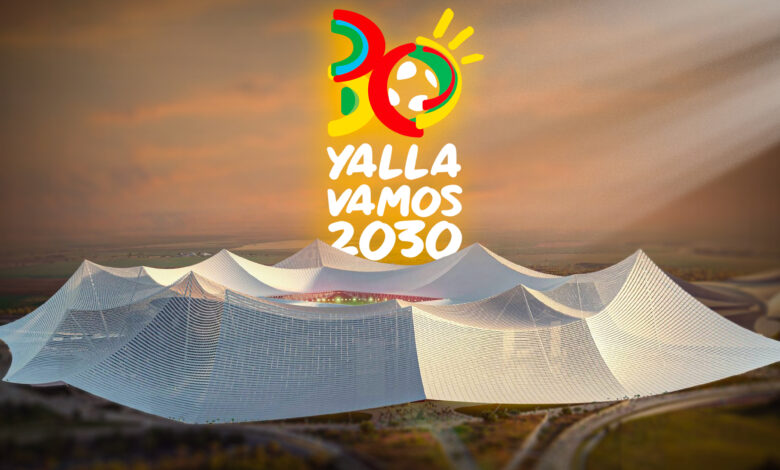
The 2030 World Cup is accelerating this transformation. However, the stakes go far beyond football.
Preparing for 2030 is not just about hosting an event; it is about preparing the Morocco of tomorrow.
A country changing before the eyes of its inhabitants
For those taking the train, waiting for a flight, driving on a new road, or seeking employment, major projects are not mere statistics.
They change distances. They reduce travel times. They bring cities closer together. They facilitate exchanges. And, above all, they can open up new possibilities.
The high-speed train (LGV) is set to extend towards Marrakech over approximately 430 kilometers. Meanwhile, Mohammed V Airport in Casablanca is expected to significantly increase its capacity.
But another project has become equally urgent: the water crisis.
In the face of water stress, desalination is taking on a strategic role, with a goal of producing about 1.7 billion cubic meters annually by 2030.
These projects address various needs, yet they tell the same story: Morocco is striving to anticipate the challenges of a country on the rise.
This transformation in infrastructure naturally leads to another question: what will Morocco produce tomorrow, and, most importantly, for whom?
From construction to value creation
Morocco has deeply transformed its productive apparatus.
Automotive, aerospace, electronics: some industries are now integrated into major international production chains.
However, this industrial success ushers in a new phase.
Building factories is no longer enough. There is a need to create more value in Morocco.
This means more skills, innovation, research, and, above all, more skilled jobs for the youth.
Renewable energies, low-carbon textiles, aquaculture, and products derived from argan offer pathways forward.
The goal is clear: to gradually shift from a Morocco that produces for the world to a Morocco that produces, innovates, and creates more value for itself.
This economic ambition will find particularly visible ground in the cities set to host the world in 2030.
Marrakech: when the showcase becomes a laboratory
Marrakech will be one of the main showcases of the World Cup.
However, behind the images of stadiums, hotels, and tourists, there is a city that must continue to thrive.
Roads, transport, sanitation, public facilities: investments related to 2030 must also meet the daily needs of residents.
This is where the difference between a successful event and a true legacy lies.
If the infrastructure sustainably improves mobility, services, and quality of life, then the World Cup will have left much more than memories.
It will have accelerated a transformation that is already underway.
Two continents, one World Cup
This transformation will also take on an international dimension.
Morocco, Spain, and Portugal will jointly host the 2030 World Cup: two continents, three countries, one competition.
For the Kingdom, it is a unique opportunity to showcase a modern, open Morocco that is connected to Europe and deeply rooted in Africa.
Yet again, the image is just the beginning.
International visibility must translate into investments, tourism, partnerships, jobs, and new opportunities for Moroccan businesses.
In other words: making Morocco known is one thing. Ensuring that Moroccans benefit from this new visibility is another.
The real challenge will come after 2030
Ultimately, this is where the true challenge lies.
In 2030, the stadiums will be filled. Trains will be running. Planes will be arriving from all over the world. Cameras will depict a modern, dynamic, and ambitious Morocco for the world to see.
Then the supporters will leave.
And the country will remain.
This is when the true assessment will begin.
How many jobs will have been created?
Which regions will have truly transformed?
Will water security have improved?
Will transportation be more accessible?
Will young people have more opportunities?
These questions will be far more important than the number of visitors or the images broadcast across the globe.
Because the true success of 2030 will not just be measured by Morocco’s ability to welcome the world.
It will be measured by its ability to provide more for those who live there.
Thus, Morocco is not just building for 2030.
It is building for the post-2030 era.
And perhaps that is the true challenge of this decade:
to make the World Cup a showcase for Morocco… while never forgetting that the most important showcase remains the daily life of Moroccans.