El Mansouri Government: A Coalition of Four Parties Begins to Take Shape
Formation of the Next Moroccan Government Takes Shape Under Fatima Ezzahra El Mansouri
The formation of the upcoming Moroccan government is becoming clearer with Fatima Ezzahra El Mansouri at the helm. The appointed head of government is continuing her consultations with the political parties represented in Parliament, aiming to establish a majority capable of supporting the future government program.
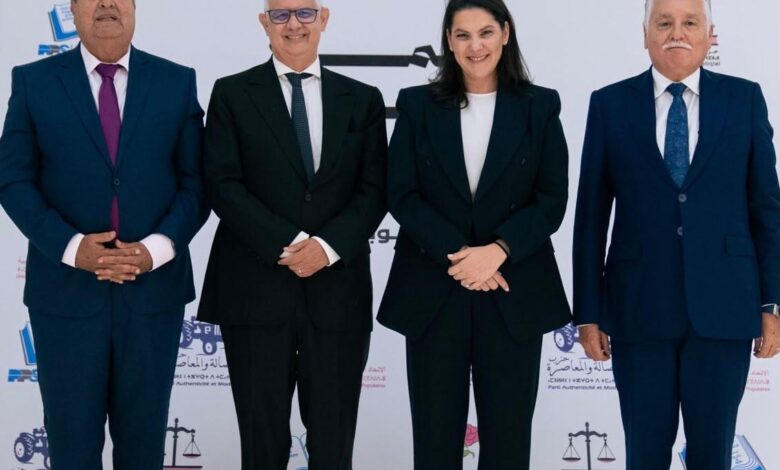
The envisioned coalition revolves around four parties: the Authenticity and Modernity Party (PAM), the Istiqlal Party (PI), the Socialist Union of Popular Forces (USFP), and the Party of Progress and Socialism (PPS). This configuration is rooted in discussions that have taken place since Fatima Ezzahra El Mansouri’s appointment as head of government.
A Majority Under Construction
Emerging at the top of the legislative elections held on September 23, 2026, with 97 seats, the PAM is leading the talks aimed at forming the next government team. The party is seeking to form an alliance with the three parties of the Koutla, namely Istiqlal, USFP, and PPS.
The final results of the legislative elections award 65 seats to Istiqlal, 26 to USFP, and 19 to PPS. Combined with the 97 seats held by PAM, these elected officials would create a coalition totaling 207 seats in the 395-member House of Representatives, surpassing the absolute majority threshold set at 198 seats.
The ongoing consultations are expected to clarify the main orientations of the government program and the modalities of participation from the various parties in the future executive team.
The PPS Joins the Coalition Dynamics
On October 12, the Party of Progress and Socialism officially announced its decision to participate in the upcoming government following a meeting of its political bureau in Rabat. This decision comes after favorable positions expressed by Istiqlal and USFP regarding their participation in the upcoming majority.
The planned configuration unites four political parties with different sensitivities, all seeking to agree on a common roadmap. Discussions are also focusing on the distribution of governmental responsibilities and the priorities that should be included in the program submitted to Parliament.
However, the final composition of the government and the allocation of ministerial portfolios remain distinct stages in the establishment of this majority.
Priorities for the Future Government Program
Beyond negotiations between parties, the new team will need to define measures aimed at addressing the economic and social expectations of citizens. Key issues such as purchasing power, employment, social justice, reduction of territorial disparities, and economic development will be among the major challenges in the next mandate.
The discussions must also take into account the national and international context, as well as the challenges Morocco faces regarding growth, public services, and the creation of economic opportunities.
The coherence of the shared program and the ability of the partners to coordinate their positions will be crucial elements for the functioning of the future majority.
An Important Step Following the September Elections
The appointment of Fatima Ezzahra El Mansouri by King Mohammed VI, following the PAM’s victory in the legislative elections, has ushered in a new phase in the government formation process. The ongoing consultations must now lead to a political agreement and subsequently to the constituting of the team tasked with implementing the government program.
If the alliance between PAM, Istiqlal, USFP, and PPS is confirmed in its current configuration, it will have a parliamentary majority of 207 seats. Upcoming announcements will provide further clarity on the definitive contours of this coalition and the direction of the new government action.