Industrial Zones: A Lever for Morocco’s Competitiveness
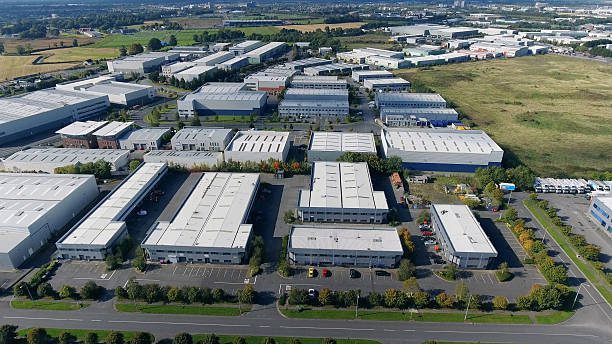
The Development of Industrial Zones: A Strategic Lever for Morocco’s Competitiveness
The development of industrial zones has become a strategic imperative for enhancing Morocco’s competitiveness and attracting new investments. In light of the transformation of global value chains, the Kingdom must focus on well-structured land, efficient infrastructure, and integrated industrial ecosystems to support production, encourage the rise of local suppliers, and boost exports.
Industrial Land: A Key Factor in Attracting Investors
Morocco’s industrial policy notably hinges on the development of industrial zones, business parks, and logistical platforms designed to host productive enterprises. These infrastructures play a vital role in the country’s appeal to both national and international investors.
For companies, choosing a site for establishment is a critical strategic decision that entails significant investments over many years. The availability of developed land connected to networks and accessible transportation infrastructure can reduce project completion timelines and facilitate the commencement of activities.
Conversely, challenges in accessing land, delays in connections, or logistical shortcomings can increase installation costs and disrupt production schedules.
Land issues thus occupy a central role in Morocco’s industrial development. Investors seek spaces that offer legal security, predictable operating conditions, and extension possibilities tailored to their needs.
The cost of land is also a determining criterion. In the most sought-after zones, real estate pressure can restrict access for small and medium-sized enterprises (SMEs) to industrial spaces. Developing a diverse offering that includes plots of land, adaptable premises, and ready-to-use buildings could help meet the varying needs of different investor categories.
Infrastructure Tailored to Business Needs
The attractiveness of an industrial zone depends not only on the availability of land but also on the quality of essential facilities and services for companies, including access to electricity, industrial water, telecommunications networks, and transportation infrastructure.
The needs vary depending on the sector. An agri-food company, an electronic components manufacturer, and a precision mechanics unit have different requirements regarding energy, supply, storage, or environmental management.
Therefore, the planning of industrial zones must account for the characteristics of targeted industries and their technical constraints. This approach would enable better adaptation of infrastructure to production realities and improve the operational conditions for businesses.
Proximity to ports offers an additional advantage for exporters. It facilitates the supply of raw materials and the shipment of finished products. Highway and rail connections also contribute to the smooth transport of goods between production sites, logistics platforms, and target markets.
In an international competitive landscape, managing logistics costs and timelines is a decisive factor in site selection.
Developing Integrated Industrial Ecosystems
Creating efficient industrial zones cannot be limited to providing land. The challenge now lies in developing authentic ecosystems that bring together production companies, suppliers, subcontractors, logistics providers, and training organizations.
Proximity between clients and suppliers can enhance technical exchanges, reduce certain supply costs, and improve production chain responsiveness. This organization is vital in sectors like automotive and aeronautics, where coordination among various players significantly impacts industrial performance.
Morocco could strengthen this dynamic by promoting synergies among companies and expanding opportunities to other sectors, including electronics, chemistry, agri-industry, and industrial equipment.
Integrating Moroccan SMEs represents another major challenge. Their presence within these ecosystems can open up access to new markets and facilitate collaboration with larger groups. However, installation costs and financial requirements can pose obstacles for entities with limited resources.
Consequently, developing small to medium-sized industrial premises, immediately operational buildings, and tailored rental solutions could foster their establishment and capacity-building.
Training, Energy, and Environment: New Industrial Challenges
The competitiveness of industrial zones also hinges on the availability of a skilled workforce. Companies require competencies capable of meeting technological advances, automated processes, and increasingly high-quality demands.
Partnerships among industrialists, higher education institutions, and vocational training centers can help align training programs with the actual needs of the labor market. This collaboration serves as a lever to facilitate recruitment and support the development of local skills.
Environmental performance is also gaining increasing importance in investment decisions. Energy and water consumption, waste management, and emissions reduction are among the challenges that industrialists must address.
In this context, establishing collective facilities for wastewater treatment, waste valorization, and energy efficiency can allow for shared investments and enhance the environmental management of sites.
The development of renewable energies and the availability of suitable electrical networks also represent potential advantages for companies engaged in decarbonization strategies. These infrastructures may improve the resilience of installations and meet the requirements of certain international markets.
Effective Governance to Enhance the Attractiveness of Industrial Zones
The quality of governance is essential for ensuring the sustainability of industrial zones. The maintenance of infrastructure, the security of installations, the continuity of services, and responsiveness to challenges faced by businesses directly impact investors’ experiences.
Streamlining administrative procedures and improving coordination among public agencies can also reduce installation timelines. Professional governance would better anticipate the needs of businesses and ensure sustainable management of developed spaces.
The territorial dimension is another important challenge. Developing industrial zones in regions with economic potential can help diversify productive establishments, stimulate local investment, and create jobs beyond the main industrial hubs.
This approach demands coordination among industrial planning, transportation infrastructure, regional development policies, and labor market needs.
Measuring the Economic Impact of Industrial Zones in Morocco
To evaluate the effectiveness of these infrastructures, assessment must go beyond merely counting the number of developed plots. The actual occupancy rate, investments made, jobs created, and added value generated are critical indicators for measuring their contribution to the economy.
The level of integration of Moroccan companies into value chains is also an essential criterion. The goal is to transform industrial zones into spaces capable of supporting local production, developing skills, and enhancing the Kingdom’s export capacity.
In an international environment marked by competition between industrial platforms, Morocco has geographical, logistical, and human assets that it can leverage further.
The development of modern, accessible, sustainable, and well-managed industrial zones thus emerges as a strategic lever to enhance the Kingdom’s attractiveness, diversify its productive apparatus, and solidify its position in international value chains.