Dakhla: The Desalination and Irrigation Project Set for Completion Soon
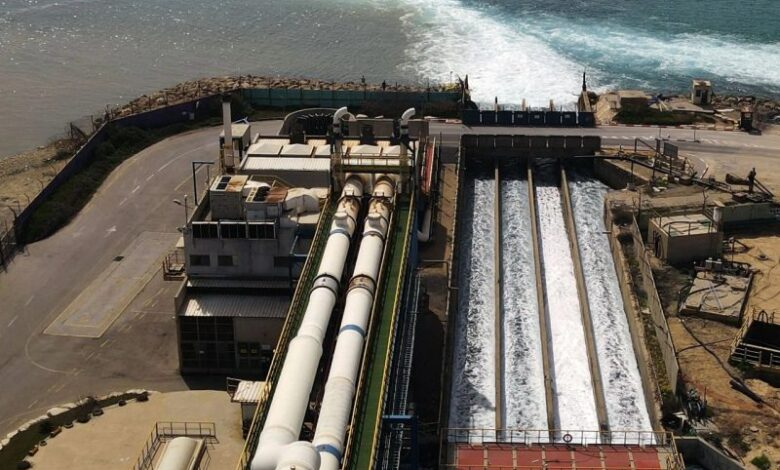
Desalination Project in Dakhla-Oued Eddahab Reaches Final Stages
The seawater desalination project and the development of a new irrigated area in the Dakhla-Oued Eddahab region is entering its final phase. According to the Ministry of Agriculture, Maritime Fisheries, and Food Sovereignty, the desalination plant is 97% complete, while the irrigation network is at 99%. The wind farm intended to supply power to the facilities is already operational.
These advancements were highlighted during a site visit conducted on Friday, October 30, 2026, by Minister Khalid Hatimy, who was monitoring the progress of major strategic projects in the southern provinces.
Located in the Bir Anzarane commune, the project has three main components: a seawater desalination plant, a wind farm with a capacity of 60 MW, and an irrigation network consisting of 130 kilometers of pipes.
The minister’s visit provided an overview of the progress of these infrastructures. The wind farm is already in service, while the construction of the desalination plant and irrigation network is at 97% and 99%, respectively.
Accompanying the minister were the wali (governor) of the region, the governor of the Oued Eddahab province, and a delegation of officials from the Ministry of Agriculture.
Launched by King Mohammed VI on the occasion of the 40th anniversary of the Green March, this project is part of the new development model for the southern provinces. Its implementation represents a vital lever for enhancing water security and supporting agricultural development in the region.
The project requires a total investment of approximately 2.6 billion dirhams and aims to sustainably secure water supply for agricultural irrigation and human consumption.
The future desalination plant will have an annual production capacity of 37 million cubic meters of desalinated water. Of this volume, 30 million cubic meters will be allocated for irrigation, while 7 million cubic meters will be designated for drinking water supply.
This resource will enable the development of an agricultural area of 5,000 hectares. The use of desalinated water is also expected to help preserve the Dakhla aquifer by reducing the agricultural sector’s reliance on underground resources.
Beyond securing water supplies, the project aims to promote crop diversification and the development of high-value agricultural products. It is intended to bolster regional agricultural activities while attracting expertise and investments from the private sector.
The program also includes a social and entrepreneurial dimension, establishing 100 small agricultural projects for the region’s youth. Each enterprise will cover an area of between 5 and 10 hectares.
Beneficiaries will receive support to facilitate their establishment, organize their activities, and expand their operations. This initiative aims to foster the emergence of new entrepreneurial ventures and enhance the engagement of young people in local agricultural dynamics.
Ultimately, the anticipated economic outcomes are significant. The project is expected to yield an annual production of approximately 500,000 tons of fresh produce and create 30,000 permanent jobs.
The Ministry also anticipates generating added value exceeding one billion dirhams.
With its desalination infrastructure, wind energy supply, and irrigation network, this program is poised to transform the agricultural potential of Dakhla-Oued Eddahab while balancing economic development, agricultural land enhancement, and water resource preservation.