Morocco 2027: The Four Technological Changes That Will Redefine the Economy
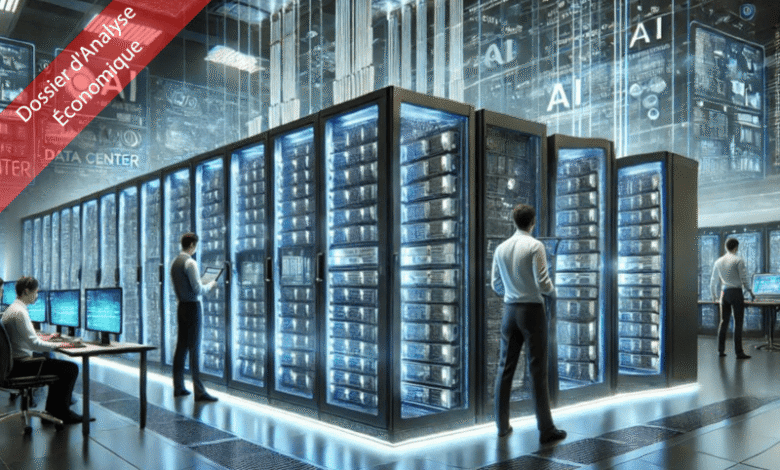
Artificial Intelligence, Digital Sovereignty, Supply Chain Restructuring, and Robotics: Four Major Transformations Set to Accelerate the Evolution of the Global Economy
For Morocco, these developments represent not only technological challenges but also a strategic opportunity to strengthen its attractiveness, bolster digital autonomy, and position itself within new international value chains.
The year 2027 is poised to mark a turning point in how economies approach technology. Following years dominated by fervor surrounding artificial intelligence and increased investments in digital infrastructure, a new imperative is gradually emerging: the transformation of innovation into tangible economic value.
This perspective emerges as one of the key findings from trends identified by research teams at Omdia, an international consulting firm specializing in technology market analysis. Four significant forces are expected to shape economic and industrial directions in the coming years: the pursuit of profitability in artificial intelligence, the fragility of supply chains, digital sovereignty, and the emergence of physical artificial intelligence.
Beneath these developments lies a deeper restructuring of global economic power dynamics, where mastery of technology becomes a decisive factor for competitiveness and strength.
From the Race for AI to the Imperative of Profitability
Since the emergence of generative artificial intelligence, major technology companies have invested heavily in data centers, computational capabilities, cloud infrastructure, and the development of new models. This innovation race is now entering a new phase: the phase of economic demonstration.
The pressing question is no longer solely about who has the most efficient artificial intelligence models, but rather who can transform them into sustainable sources of revenue and productivity.
For businesses, the current challenge lies in integrating AI into operational processes, customer relations, industrial production, human resource management, and financial analysis. Technology must justify its costs through measurable gains.
This evolution could also accelerate the transformation of small and medium-sized enterprises (SMEs), which now have access to tools capable of lowering entry barriers in sectors traditionally reserved for larger entities.
For Morocco, this transition is a competitiveness issue. Embracing artificial intelligence solutions in the banking, industrial, tourism, agricultural, and media sectors could enhance productivity and foster the emergence of new economic models. However, this transformation must be supported by training, investment, and better integration of technologies into the productive fabric.
Supply Chains Tested by Global Instability
The second transformation pertains to international supply chains. Successive crises, geopolitical tensions, trade conflicts, and logistical disruptions have profoundly altered how companies perceive risk.
Globalization, which was once structured around the quest for the most competitive production costs, now increasingly prioritizes the security of supplies and proximity to markets.
Diversifying suppliers, relocating certain operations, and establishing strategic stockpiles have become essential components of industrial strategies.
This restructuring could benefit economies capable of combining stability, efficient infrastructure, geographical proximity, and integration into major international markets.
In this context, Morocco possesses several advantages. Its location at the crossroads of Europe, Africa, and the Atlantic, along with its port and logistics infrastructures and experience in the automotive and aeronautics industries, presents promising prospects.
However, opportunity will not materialize automatically. It requires reinforcing local industrial integration, developing technical skills, and reducing dependencies on equipment, components, and strategic technologies.
The goal is to gradually transition from being a competitive industrial platform to a player more deeply integrated into design, production, and innovation.
Digital Sovereignty: The New Terrain of Economic Power
The third trend relates to a core issue within national strategies: digital sovereignty.
Behind the digital services utilized daily by businesses, administrations, and citizens lies infrastructure often controlled by a limited number of international players. Cloud services, operating systems, platforms, semiconductors, artificial intelligence, and data storage have become essential elements of economic power.
This dependence raises questions regarding the protection of sensitive information, the continuity of services, and the capacity of states to maintain control over their strategic infrastructures.
Digital sovereignty does not necessarily equate to technological autarky. Rather, it involves having sufficient national capabilities, diversifying partners, and mastering the terms of use of essential technologies.
For Morocco, this issue takes on special significance with the acceleration of digital transformation within its administrations and businesses. The development of data centers, cloud infrastructures, cybersecurity, and local competencies represents a strategic undertaking.
This question extends beyond mere computing domains. It directly impacts businesses’ competitiveness, economic security, and the Kingdom’s ability to participate in the new knowledge economy.
In this perspective, developing a high-performing national digital ecosystem could also foster the emergence of young tech companies and solutions tailored to the needs of African markets.
Artificial Intelligence Transitions from Screens to the Real World
The fourth mutation may be one of the most visible in the coming years: physical artificial intelligence.
After transforming text, image, video production, and data analysis, AI is starting to integrate directly into equipment capable of interacting with their environment.
Industrial robots, autonomous vehicles, smart agricultural machinery, automated logistical systems, and humanoid robots exemplify this trend. Artificial intelligence is no longer limited to processing information or assisting users; it is gradually becoming capable of driving physical actions.
This convergence of artificial intelligence, robotics, sensors, and automation could profoundly transform several economic sectors.
In industry, it promises improved accuracy and productivity. In agriculture, it opens new prospects for water management, crop monitoring, and yield optimization. In logistics, it could accelerate the automation of warehouses and transport operations.
For Morocco, these technologies are particularly relevant in light of challenges linked to industrial modernization, food security, and water resource management. However, adoption will require investments, specialized skills, and consideration of evolving occupations and employment dynamics.
Morocco Faces a Strategic Choice
These four trends converge toward a common reality: technology is no longer just a tool for growth. It is becoming one of the primary determinants of sovereignty, competitiveness, and the attractiveness of economies.
For Morocco, the challenge in the coming years will be to transform its achievements into genuine innovation capacity. The Kingdom benefits from a favorable geographic position, structuring infrastructures, and an industrial base that allows it to contemplate a move upmarket in several sectors.
However, this ambition necessitates surpassing a mindset focused solely on adopting technologies developed elsewhere by investing more in research, training, local innovation, and the development of high-value-added solutions.
The question is equally pertinent on an African scale. In a continent where the demand for digital infrastructure, automation, and technological services remains significant, countries capable of developing robust ecosystems could emerge as regional platforms for innovation and investment.
By 2027, the true dividing line between economies may not be solely their ability to access the most advanced technologies but their capacity to master, adapt, and, above all, extract sustainable economic value from them. For Morocco, this transformation embodies both a challenge for sovereignty and an opportunity to solidify its position within the new global economic landscape.