CDG: World Savings Day Highlights the Importance of Financing Morocco’s Financial Sovereignty
The Caisse de Dépôt et de Gestion (CDG) Organized World Savings Day to Mobilize Savings for Sovereignty Financing
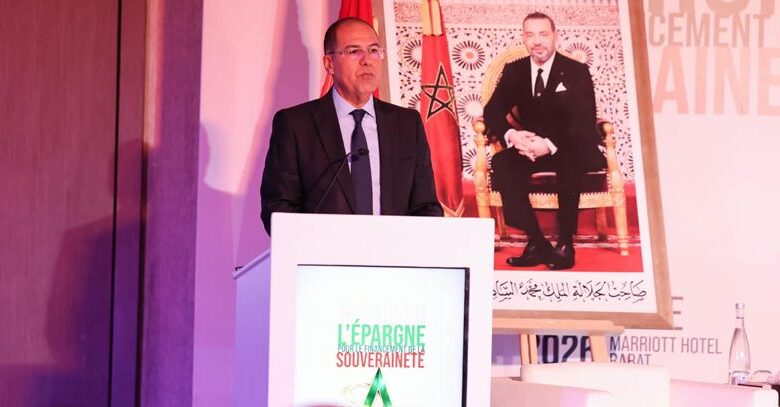
On Tuesday, November 24, 2026, in Rabat, the Caisse de Dépôt et de Gestion (CDG) hosted World Savings Day under the theme "Mobilizing Savings for Financing Sovereignty." This event brought together government officials, financial institutions, and international partners to address a key issue: transforming national savings into long-term financing resources to support the Kingdom’s major development projects.
Mobilizing national savings is asserted to be a strategic lever for supporting long-term investments in Morocco. In this context, the CDG convened several institutional and financial stakeholders in Rabat for World Savings Day.
Focusing on the theme "Mobilizing Savings for Financing Sovereignty," this gathering occurs at a time marked by a desire to strengthen domestic financing capabilities, aligning with the directives of King Mohammed VI. In his Throne Speech on July 29, the Sovereign emphasized the necessity of mobilizing unprecedented financial resources, predominantly from national funding sources.
Financial Sovereignty at the Heart of Discussions
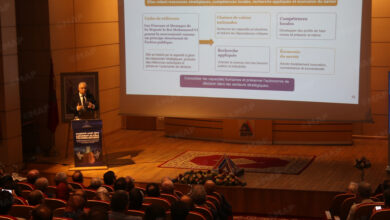
At the opening of the proceedings, Khalid Safir, Director General of the CDG, highlighted Morocco’s ability to mobilize its own resources and direct them towards national priorities.
"Financial sovereignty is not just about having resources; it’s about being able to mobilize them through our own institutions, directing them towards our priorities, and ensuring their long-term integration," he stated.
Fouzi Lekjaa, Minister of Economy, Finance, and Public Performance, identified four priority areas to enhance the role of savings in financing the economy: modernizing and broadening its collection, further structuring long-term savings, improving the allocation of collected resources, and strengthening their mobilization for local territories.
The Minister also underscored the importance of institutional investors in this dynamic, presenting the CDG model as a significant asset for the national economy.
Household Financial Wealth Estimated at 1.192 Trillion Dirhams
Abdellatif Jouahri, Governor of Bank Al-Maghrib, noted that the issue of savings transcends its mere financial dimension. Geopolitical tensions, climate risks, and cybersecurity challenges, he argued, underscore the necessity of mobilizing more national resources for economic development.
During the inaugural conference, Chakib Benmoussa, High Commissioner for Planning, emphasized the importance of enhancing the connection between national savings and productive investment.
Data presented at the event revealed that the financial wealth of Moroccan households is estimated at 1.192 trillion dirhams, with more than 78% held in the form of bank deposits. This heavy concentration in liquid placements raises questions about converting part of these resources into longer-term financing capable of supporting productive investment.
CDG Unveils Directions for Its Strategic CAP2030 Plan
The meeting also provided an opportunity to assess the international experiences of deposit institutions, with participation from representatives of French, Italian, and Gabonese institutions, as well as from the European Savings Observatory.
In this context, Mohamed Ali Bensouda, Secretary General of the CDG, presented the main orientations of the strategic CAP2030 plan. This plan notably envisions a re-focusing of the institution on its long-term missions, a reorganization of asset management, and a strengthening of its risk control mechanisms.
Additionally, the CDG aims to continue its efforts, in partnership with Al Barid Bank and the Ministry of Economy, Finance, and Public Performance, to revitalize the National Savings Fund.
Towards an Annual Consultation Framework on National Savings
At the conclusion of the proceedings, the CDG committed to compiling recommendations made during the discussions into a summary and ensuring follow-up actions. The institution also proposed integrating this meeting into an annual consultation schedule dedicated to the mobilization of national savings.
Through this initiative, the challenge extends beyond simply collecting financial resources. It aims to enhance mechanisms that transform household and economic actor savings into sustainable investments while bolstering the Kingdom’s financing capabilities from its own resources.