Growth: How to Bridge the Gap Between Promise and Economic Reality
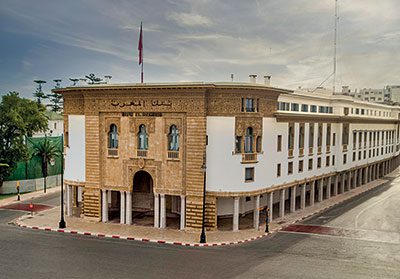
The new government is banking on a growth rate of 3.7% for the upcoming year, while Bank Al-Maghrib projects a more conservative 2.9%, and the High Commission for Planning (HCP) expects 3%. The government also promises to maintain a deficit of 3%, although the central bank forecasts it will reach 3.5%.
The initial budget from the El Mansouri government presents a stark contrast: a growth projection of 3.7% from Rabat against 2.9% from Bank Al-Maghrib and 3% from the HCP. The new administration inherited a framework from the outgoing government, which had anticipated a growth of 4.1%, and has since adjusted it downward, though not sufficiently to align with the figures of other institutions.
### The Harvest Trap
Officially, the decline in growth is attributed to agriculture. Following an exceptional harvest of 93 million quintals, the government now projects a reduced output of only 70 million quintals for 2027. This year, agricultural activity benefited from the return of rain, with Bank Al-Maghrib estimating a growth of 16%. However, for the next year, the government anticipates merely a 0.5% increase. The HCP takes a more pessimistic view, predicting a contraction of 6.8%, while Bank Al-Maghrib suggests a decline of 7.6%. Much of the disagreement stems from this issue.
Yet, weather patterns alone do not explain the entire situation. Bank Al-Maghrib has revised downwards its projections for non-agricultural activities for 2026, now expecting only a growth of 3.1%, after initially more favorable forecasts earlier in the year. The central bank attributes this adjustment to less robust performance in mining and manufacturing sectors than previously anticipated.
### Proving the Rebound
Despite differing opinions, everyone is betting on a recovery. By 2027, both the government and Bank Al-Maghrib expect around 4% growth outside of agriculture, while the HCP projects 4.2%. This represents the real gamble of the budget, as the non-agricultural sector has shown signs of stagnation, with growth recorded at just 3.9% in 2025, down from 5.1% in 2024.
### A Decade of Dependence
This scenario is not new. Before the pandemic, Morocco’s economy grew on average by 2.9% per year; from 2022 to 2024, the average was 3.3%. This pales in comparison to the 5% growth the new government is promising. While past performances do not guarantee future results, they serve to remind us that the Moroccan economy largely moves in sync with climatic conditions more than industrial progress. Public finances, however, have improved significantly, with the deficit shrinking from 7.1% of GDP in 2020 to 3.5% last year, now below pre-crisis levels, and public debt has decreased by over five percentage points.
### A Program to Finance
It is on this foundation that the government is stacking its promises, including 62 billion dirhams in social measures, a staggered decrease in income tax extending to 2031, and an average growth ambition of 5%. All of this is to be achieved while keeping the deficit in check at 3%.
At the end-of-year monetary policy council meeting, we will see if the various positions align or whether the government remains isolated with its figures.