Morocco Emerges as a New Chinese Industrial Hub for Electric Vehicles, Raising Concerns in Europe
Morocco Strengthens Its Position as a Strategic Destination for Chinese Industrial Investments
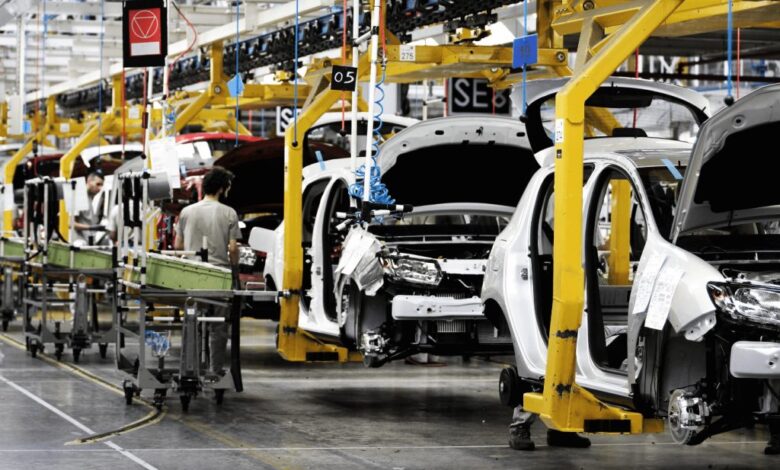
Morocco is gradually solidifying its role as a strategic destination for Chinese industrial investments. In recent years, the Kingdom has become one of the primary production bases chosen by Chinese companies looking to expand their presence in international markets, particularly in the electric vehicle and smart mobility technology sectors.
According to the Spanish media outlet Vandal, Chinese businesses have announced nearly $6 billion in investments in Morocco since the post-Covid-19 era, highlighting the Kingdom’s attractiveness as an industrial platform linking Asia, Europe, and Africa.
The report emphasizes that the Tangier-Kénitra industrial corridor has emerged as a major hub in this dynamic. Numerous Chinese groups are developing production units specializing in electric vehicle components, braking systems, tires, as well as lithium batteries and cells, thus enhancing Morocco’s integration into global electric mobility value chains.
Among the most notable projects is the upcoming battery gigafactory by Gotion High-Tech, alongside the Tangier Tech project, which is being developed as a next-generation industrial platform aimed at hosting international companies in the technology and advanced industry sectors.
This surge in Chinese investments comes amidst increasing trade tensions between Beijing and the European Union. Brussels recently imposed tariffs of up to 45% on certain electric vehicles manufactured in China, alleging that these vehicles benefit from public subsidies that distort competition in the European market.
European Trade Commissioner Maroš Šefčovič, cited by Vandal, believes that the expansion of Chinese manufacturers in Morocco and other countries may reflect a strategy to absorb China’s production overcapacity by establishing industrial sites intended for export to Europe.
According to several European officials, this trend could pose a new challenge for the EU’s trade policy, especially if products manufactured in Morocco can acquire Moroccan origin after local processing, thus qualifying for the preferential trade agreements between Morocco and the EU.
However, the potential implementation of restrictive measures against products stemming from Chinese investments in Morocco could also impact European companies operating in the Kingdom.
The report highlights that major manufacturers like Renault and Stellantis heavily rely on their Moroccan production sites and local subcontractor networks. Any additional restrictions on Moroccan exports could raise their production costs and reduce their competitiveness.
Chinese companies, for their part, assert that their industrial presence in Morocco is based on a logic of partnership and complementarity. They emphasize their commitment to leveraging local skills while promoting the transfer of technology and industrial expertise.
In this regard, Zhongji Kai, project manager at APG, a specialist in braking systems, indicated that the factory the company plans to build at Tangier Tech, with an investment of $70 million, will source local labor and materials, while also benefiting from Chinese technological expertise.
According to him, this cooperative model could strengthen industrial integration among Morocco, China, and Europe, making the Kingdom an essential link in the global supply chain for electric vehicles.