Morocco-United Arab Emirates: A Geo-Economic Partnership Driven by Strategic Investments in Water and Energy
Title: Strengthening Ties: Morocco and the UAE Enter a New Geoeconomic Phase
The relationship between Morocco and the United Arab Emirates (UAE) is entering a new phase, characterized by an increasingly pronounced geoeconomic dimension. This dynamic is particularly rooted in significant investments across key sectors such as water, energy, telecommunications, infrastructure, and industry.
According to an analytical report published by the Observer Research Foundation (ORF), titled "Morocco and the UAE: A Trans-Arab Geoeconomic Partnership," the partnership between Rabat and Abu Dhabi has gradually evolved in recent years into a more structured cooperation. This evolution is underpinned by long-term investments as well as the growing role of state-owned enterprises and sovereign wealth funds in delivering major projects.
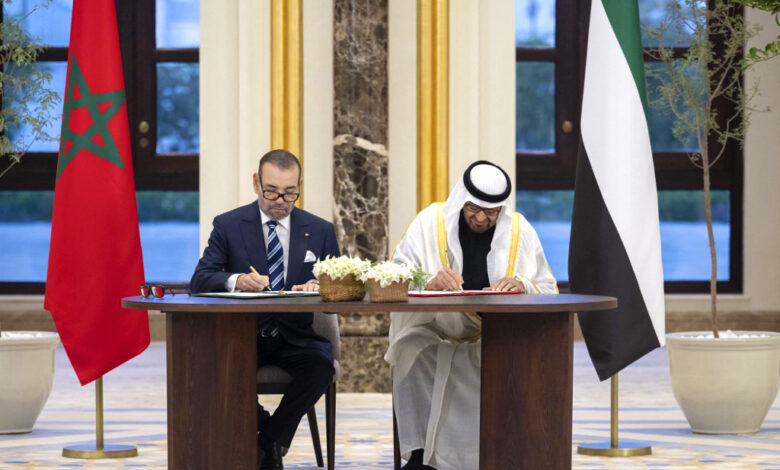
The report emphasizes that this development has significantly accelerated following the signing of the Joint Declaration in December 2023, which paved the way for expanded cooperation in several areas, including energy, water, agriculture, finance, infrastructure, transportation, fertilizers, and food security.
In the wake of this declaration, 12 memorandums of understanding were signed across various sectors such as high-speed rail, water and energy, agriculture and marine fishing, airports and ports, the Africa-Atlantic gas pipeline, finance and capital markets, tourism, real estate, and data centers.
The year 2025 marked a significant milestone in the fulfillment of these commitments, particularly in telecommunications, water, and energy.
In telecommunications, Morocco Telecom and inwi announced a strategic alliance aimed at developing two joint projects in the fields of fiber optics and 5G infrastructure, with an estimated investment of around $460 million over the first three years.
In the realms of water and energy, a joint investment of approximately $14 billion has also been announced, involving TAQA, Nareva, the Mohammed VI Fund for Investment, and the National Office of Electricity and Drinking Water.
This program primarily focuses on developing desalination plants, constructing two high-voltage direct current lines with a capacity of 1,500 MW each, installing around 1,200 MW of wind energy, and enhancing interconnection between the Bouregreg and Sebou basins.
According to the ORF, the scale of these projects illustrates a shift in the Morocco-UAE partnership, now oriented towards sectors directly related to economic, energy, and water security, as well as strategic infrastructure.
The year 2024 also marked a new chapter in the development of bilateral economic relations, with Morocco joining the Integrated Industrial Partnership for Sustainable Economic Development and signing a Comprehensive Economic Partnership Agreement in July of the same year.
These agreements provide Morocco with new opportunities for market access and regional industrial investment and supply chain development. They also enable the UAE to strengthen its presence in a Moroccan economy that features an expanding industrial base and a strategic position connecting Europe to Africa, as well as the Atlantic to the Mediterranean.
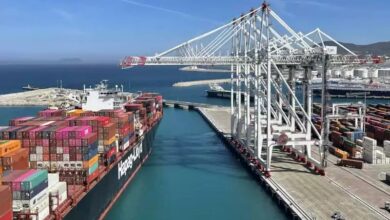
The report also highlights the growing role of state-owned enterprises and sovereign wealth funds from both countries in implementing strategic projects. In Morocco, the Mohammed VI Fund for Investment, the OCP Group, and ONEE hold significant positions, while Emirati players such as TAQA, AD Ports Group, and sovereign wealth funds play vital roles.
This convergence of investment models creates, according to the ORF, a conducive environment for the development of long-term projects in sectors requiring substantial capital, including energy, water, infrastructure, and industry.
However, cooperation is not limited to infrastructure alone. Industry is also assuming an increasingly prominent role in the economic strategies of both countries. Morocco has developed crucial industrial sectors in recent years in automotive, aerospace, defense, logistics, and renewable energy, while the UAE has launched its "Operation 300bn" strategy, aiming to elevate the contribution of its industrial sector to 300 billion Emirati dirhams by 2031.
This alignment of industrial policies opens up prospects for creating common value chains in clean energy, fertilizers, food security, minerals, technology, and water.
Furthermore, the report emphasizes the geographical complementarity of the two countries. Morocco serves as a strategic gateway to European and African markets, benefiting from a significant Atlantic coastline. The UAE, in turn, occupies a leading position as a global financial and logistics hub.
This complementarity could thus foster new opportunities in trade, energy, transportation, and investment, gradually extending the partnership beyond strictly bilateral boundaries.
In the medium to long term, the Observer Research Foundation predicts that the Morocco-UAE partnership will continue to develop, with particular emphasis on water, energy, food security, industry, logistics, tourism, and infrastructure.
This evolution outlines the contours of a geoeconomic partnership based on the complementarity between the financial and investment capacities of the UAE and the industrial, infrastructural, and geographical strengths of Morocco. Such a dynamic has the potential to further enhance Morocco’s position as an economic and logistical platform linking Europe, Africa, and global markets.