Morocco–United States: Youssef Amrani Bets on Investments
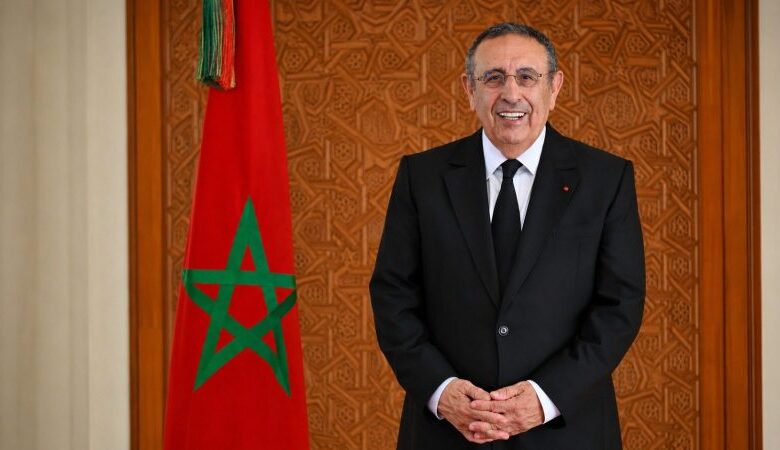
Morocco aims to strengthen its economic partnership with the United States by leveraging its industrial assets, stability, and strategic position in global supply chains. On October 22, 2026, in Miami, the Kingdom’s Ambassador to Washington, Youssef Amrani, called for a renewed impetus on bilateral exchanges, particularly in critical minerals, aerospace, agriculture, energy, and technology.
Speaking at the inaugural Morocco Days in Miami, organized by the Moroccan consulate from October 22 to 24, the diplomat emphasized the alignment between American economic priorities and the Kingdom’s industrial ambitions. The event brought together around fifty American business leaders, investors, and institutional representatives.
Morocco Days in Miami: Strengthening Economic Partnerships
Alongside the Consul General of Morocco in Miami, Chafika El Habti, Secretary General of the department responsible for Moroccans residing abroad, Ismail Lamghari, and representatives from the Moroccan Agency for Investment and Export Development (AMDIE), Youssef Amrani highlighted the potential for cooperation between the two nations.
The aerospace sector, critical minerals, agriculture, energy, and technology are among the areas likely to encourage new investments and enhance industrial exchanges.
According to the ambassador, the bilateral partnership possesses the necessary political, institutional, and industrial foundations to take a substantial step forward. The challenge now lies in transforming the achievements of Moroccan-American relations into concrete projects that generate growth, jobs, and competitiveness.
250 Years of Friendship and 20 Years of Free Trade Agreement
The year 2026 holds particular symbolic significance in relations between Rabat and Washington. It marks the 250th anniversary of American independence within the historical context of the friendship between the two countries, as well as the twentieth anniversary of the implementation of their free trade agreement.
Signed in 2004 and enacted in 2006, this agreement remains the only free trade agreement the United States has with an African country. It constitutes an important framework for trade and investment between the two economies.
Youssef Amrani reminded attendees that this historical relationship is built on a political trust that has endured across generations. He called for this relationship to be economically translated in a manner that matches its potential by developing partnerships capable of responding to the transformations in the global economy.
In this perspective, cooperation between Morocco and the United States is expected to extend beyond traditional trade to encompass productive investments, industrial supply chains, and innovation.
Critical Minerals and Industry at the Heart of Priorities
In a context characterized by the quest for more diversified and resilient supply chains, Morocco intends to showcase its strengths to American investors. Its geographical location, infrastructure, and the development of its industrial ecosystems serve as compelling reasons to attract new projects.
Critical minerals represent a particularly important axis of cooperation, given the needs associated with advanced technologies, energy transition, and new industrial value chains.
Aerospace, agriculture, energy, and technology also offer prospects for collaboration. For American companies, the Kingdom can serve as a competitive industrial platform and a springboard to access several regional markets.
The ambassador emphasized the need to transform these advantages into concrete investment opportunities, highlighting Morocco’s stability and its commitment to continuing its economic transformation.
The Moroccan Diaspora as a Bridge for Investors
The Miami meeting also highlighted the role of the Moroccan community established in the United States in fostering economic ties between the two countries.
Consul General Chafika El Habti underscored Florida’s growing importance in Moroccan-American economic and human relations. She discussed the opportunities presented by fostering exchanges in investment, innovation, and trade.
The consular network aims to support entrepreneurial initiatives and facilitate connections between economic stakeholders from both nations. The goal is to make Miami a platform for new synergies between Moroccan and American businesses.
For his part, Ismail Lamghari presented the skills of Moroccans established abroad as a leverage for economic outreach, investment, and knowledge transfer.
This approach aligns with the desire to enhance the contribution of Moroccans worldwide to national development by involving them more in key projects and new economic opportunities within the Kingdom.
AMDIE Showcases Morocco’s Assets
Representatives from the Moroccan Agency for Investment and Export Development presented the key advantages of Morocco for investment to attendees. Their discourse focused on the diversity of industrial ecosystems, the quality of infrastructure, and the reforms implemented to improve the business climate.
Also highlighted were the support mechanisms for investors and the prospects opened by major infrastructural projects to better familiarize American operators with the Moroccan market.
The aim is to facilitate the identification of new opportunities and promote the emergence of sustainable industrial partnerships.
Towards a Strengthened Moroccan-American Economic Partnership
Through the Morocco Days in Miami, Morocco seeks to enhance its visibility among American business circles and to reinforce connections between companies, investors, and institutions.
For Youssef Amrani, the bilateral relationship must now translate into greater investments and economic cooperation commensurate with its historical and political foundations.
In an international environment where diversifying supply chains and securing strategic resources are increasingly important, the Kingdom aims to position itself as a sustainable industrial partner for American businesses.
The success of this ambition will depend significantly on realizing established contacts, developing joint projects, and the ability of both countries to translate their diplomatic proximity into tangible economic benefits.