OCP: Morocco Diversifies Its Sulfur Purchases
Morocco Diversifies Sulfur Supply Sources Amid Global Market Disruptions
In response to decreasing sulfur deliveries from the United Arab Emirates and disruptions in the global market, Morocco has diversified its supply sources by turning to Russia, Georgia, the United States, and Canada. According to maritime analysis firm Kpler, in a note published on Monday, October 26, 2026, these alternative purchases have helped to offset part of the deficit and maintain the activity of Morocco’s phosphate industry, despite a pressured global supply.
Morocco Looks to New Suppliers
Two shipments of sulfur were loaded in October at the Russian port of Ust-Luga, located in the Gulf of Finland, and their arrival at Jorf Lasfar, on Morocco’s Atlantic coast, is anticipated before the end of the month.
These shipments come in the context of a resurgence in Russian sulfur exports, following an interruption in July. According to data cited by Kpler, volumes exported by Russia rose to 115,000 tons in September, having fallen to zero two months earlier.
For Morocco, this diversification of suppliers is a strategic imperative. Sulfur is an essential raw material for the production of phosphate fertilizers and a crucial component of the industrial chain of OCP Group, one of the world’s major buyers of this resource.
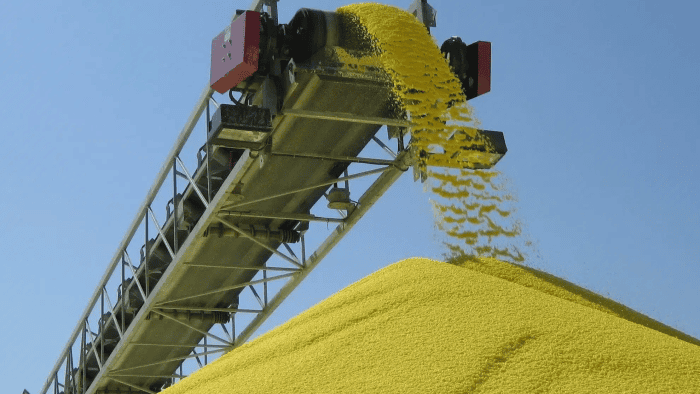
The combustion of sulfur produces sulfuric acid, which is used in the processing of phosphate rock, subsequently converted into phosphoric acid, vital for manufacturing various types of fertilizers. The Jorf Lasfar complex plays a central role in this transformation chain and in the exports of the Moroccan group.
Emirati Deliveries Decline
The United Arab Emirates has up until now been a major supplier to the Moroccan market. However, shipments to the kingdom nearly ceased between May and June 2026, according to maritime data analyzed by Kpler. Deliveries resumed in July but have not returned to pre-disruption levels immediately.
Russia, Georgia, the United States, and Canada have helped to make up for some of this shortfall. These alternative supplies have supported the operation of Moroccan industrial facilities, even if the volumes available remain below those observed before the global market disruptions.
Challenges are not limited to Morocco’s trade relations with the UAE. Russia has extended its restrictions on the export of liquid, granular, or chunk sulfur until December 31, 2026, with certain exemptions for members of the Eurasian Economic Union. Kazakhstan also suspended its foreign sales as of June 27, except for shipments to Russian rail stations. Meanwhile, India had halted its exports between May and July.
In this context, increasing the variety of supply sources allows Morocco to distribute risks among several producers. However, it does not eliminate the constraints associated with trade restrictions, logistical challenges, and the availability of exportable volumes.
The Straits of Hormuz at the Center of Global Market Tensions
The Strait of Hormuz has become one of the main bottlenecks in the international sulfur trade. Between March and September, shipments that passed through this strategic route accounted for about 55% of their pre-conflict cadence, according to Kpler.
The three-month moving average of transported volumes has fallen to 541,000 tons, down from 1.35 million tons in February. This contraction has significantly reduced the availability of sulfur from the Gulf, a region that accounted for nearly half of global trade in this raw material prior to the disruptions.
However, Kpler noted a temporary increase of 517,000 tons of crossings between May and June. This rebound is attributed to the departure of vessels that had been loaded and immobilized since March. The frequency of crossings then exceeded pre-conflict levels by 30%, while Gulf terminals were lacking ships available for new loadings.
In May, as many as 26 loaded vessels awaited departure, while the region had no more arriving bulk carriers (ships arriving without a cargo) to facilitate new operations. Another backlog formed between July and August after the initial queue was cleared.
The shortage of available vessels thus limited shipments, even when sulfur could be loaded. In total, Gulf ports lost about one-third of their export volumes. This contraction in supply contributed to a price increase for sulfur of around 75%, according to Kpler’s analysis.
OCP Adapts Production to Sustain Exports
In the face of reduced supplies, OCP Group has adjusted its industrial schedule. According to data cited by Kpler, the Moroccan producer advanced some of its maintenance stops and reduced its production by about 30% in the second quarter of 2026. It returned to full capacity by the end of June.
The group also favored triple superphosphate (TSP), a fertilizer that requires less sulfur than other phosphate products. This adjustment in its product mix has helped limit the consumption of raw materials during the most challenging months for supplies from the Gulf.
Moroccan exports of phosphate fertilizers decreased in May, before returning to high levels in June and September, despite still limited sulfur imports. Kpler attributes this trend to the utilization of some available stocks and the adjustment of OCP’s production schedule, which helped maintain deliveries to foreign markets.
Stocks Cushion the Blow, but Risks Remain
Sulfur reserves serve as a temporary buffer against disturbances in the international market. They allow for the maintenance of production and export volumes for a limited time, even when new deliveries are dwindling.
However, a prolonged supply crisis could gradually increase industrial costs and force OCP to reassess the distribution of its production among different categories of fertilizers. Marketable volumes could subsequently be affected if tensions persist.
Thus, the diversification of suppliers, adjustment of the product portfolio, and mobilization of stocks appear to be three essential levers to mitigate the effects of the crisis. For the Moroccan phosphate industry, the evolution of maritime flows in the Gulf and the availability of sulfur will remain critical to securing supplies and preserving export competitiveness.