PLF 2027: The government aims to extend the income tax exemption to salaries below 10,000 DH.
Proposed Tax Reform Aimed at Increasing Household Purchasing Power
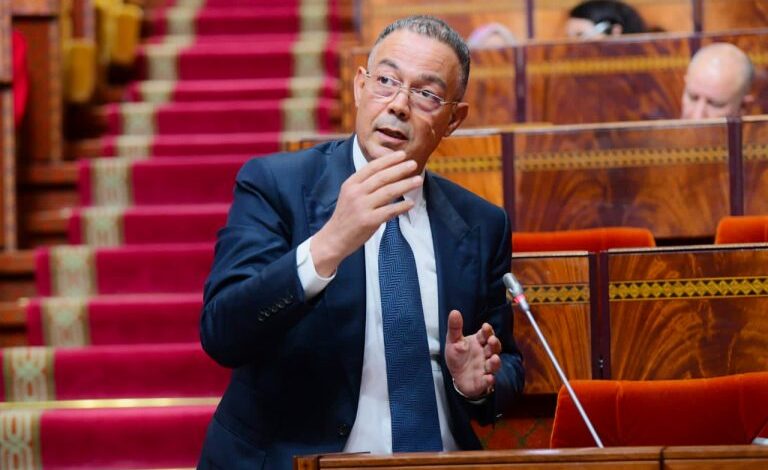
Presented by Fouzi Lekjaa on October 23, the tax reform aims to exempt net monthly salaries below 10,000 dirhams from income tax (IR) starting January 2027. Estimated to cost 5.5 billion dirhams in its first year, this measure is part of a gradual restructuring of the tax scale expected to continue until 2031. This move is intended to bolster purchasing power, although its overall impact will depend on the final adoption of the legislation.
The message is clear, but the financial implications are equally significant. As part of the 2027 Finance Bill (PLF), the government proposes a new reduction in payroll taxes: net monthly salaries under 10,000 dirhams would be exempt from income tax starting January 1, 2027. While presenting budgetary directions to both Chambers of Parliament, Minister of Economy, Finance, and Public Performance, Fouzi Lekjaa, estimated that around 87% of affected employees would be completely exempt from income tax.
Behind this announcement lies a dual objective. On one hand, it aims to increase households’ disposable income, while on the other hand, it seeks to gradually revise the taxation structure on earned income. For the government, this reform serves as a lever to support purchasing power at a time when the cost of living remains a central concern for households.
A Budgetary Effort of 5.5 Billion Dirhams
The proposed system aims to raise the threshold for exempt net taxable income from 40,000 to 60,000 dirhams per year. It includes a reorganization of tax brackets and a gradual reduction of rates, with the goal of lowering the top marginal rate from 37% to 30% by 2031.
According to the estimates presented by the minister, the majority of affected employees could expect a monthly gain of about 500 dirhams starting in 2027. The budgetary cost of this initial phase is set at 5.5 billion dirhams.
This figure highlights the effort being made by public finances. It also reflects the difficult balance the government must maintain: reducing the tax burden on salaries without jeopardizing budgetary equilibrium, especially given the significant funding needs for public policies.
However, the actual benefit received will vary based on each taxpayer’s taxable income and financial situation. The announced relief should not be interpreted as a uniform increase of 500 dirhams for all employees.
A Reform Spanning Until 2031
The changes will extend beyond just the exemption threshold. The PLF outlines a gradual transition of tax scales between 2027 and 2031, with adjustments in brackets and rates over the years. This trajectory aims to sustainably alter the distribution of the tax burden among income categories.
The chosen timeline allows the state to spread the budgetary effort, but it also necessitates a cautious interpretation of the anticipated gains in the medium term. The amounts expected in the coming years will depend on the implementation of successive scales and the definitive provisions that are adopted.
For businesses, the reform will require adjustments to payroll systems and withholding processes. The publication of the final text and its application modalities will be crucial in translating the proposal into concrete changes reflected in employees’ payslips.
Purchasing Power Put to the Test of Results
The exemption from income tax serves as a direct instrument to support disposable income. However, its economic impact cannot be assessed in isolation. The actual fiscal benefit will notably depend on price fluctuations, households’ fixed expenditures, and wage dynamics.
The measure also raises a question of balance: how to reconcile the reduction in labor taxation with the funding of public services and the necessary investments for growth? The projected cost of 5.5 billion dirhams in 2027 highlights the significance of this balancing act.
For the government, this reform represents a step towards overhauling income taxation. For employees, its value will be measured by the actual amount retained each month. Between social ambition and budgetary constraints, the timing of implementation and the real effects on disposable income will be the key indicators to watch.