
Tomatoes: Morocco Confirms Its Second Place in the EU
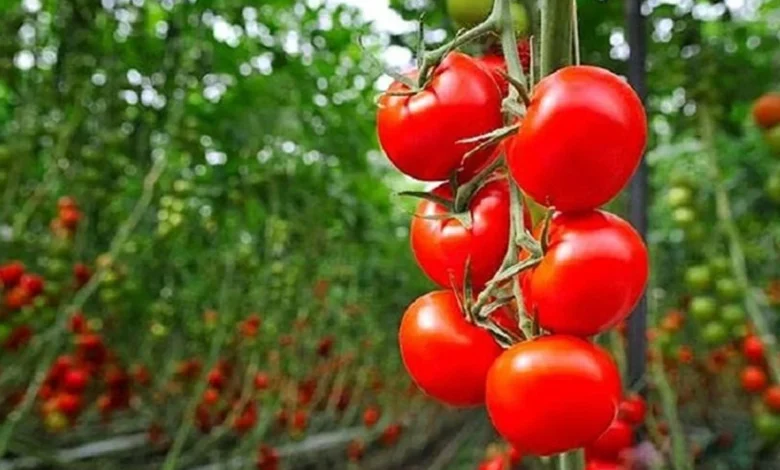
Morocco Solidifies Its Position Among Major Tomato Suppliers to the European Union
As of the end of the 2025/2026 season, Morocco has once again surpassed Spain in tomato export volumes to the European market, securing its position as the second-largest supplier for the second consecutive season, trailing only behind the Netherlands.
This trend is highlighted in an analysis published by the specialized website Hortoinfo, based on data from Euroestacom, which utilizes statistics from Eurostat and Icex. Over the past ten seasons, Moroccan tomato exports to the European Union have increased by more than 22%, while those from Spain and the Netherlands have seen a decline.
Moroccan Exports Outshine Spanish Shipments
Between the 2016/2017 and 2025/2026 seasons, the volume of tomatoes shipped from Morocco to the EU rose from 403,798 to 493,327 tonnes, marking an increase of 22.17%.
In contrast, Spanish exports experienced a drop of 36.99%, plummeting from 755,175 to 475,803 tonnes. The Netherlands also faced a reduction of 18.4%, with exports declining from 947,852 to 773,449 tonnes.
Thus, for the second year running, Morocco has outpaced Spain, capturing 17.74% of the total tomato volumes imported by EU member states from the leading listed suppliers.
Netherlands Maintains a Strong Lead
Despite the decline observed over the past decade, the Netherlands retains its position as the top supplier in the European market. The Dutch exported approximately 773,450 tonnes of tomatoes to the EU during the 2025/2026 season, accounting for 27.81% of the total volume.
These exports generated a value exceeding 1.64 billion euros, with an average price of 2.13 euros per kilogram. Morocco ranks second, exporting nearly 493,330 tonnes, or 17.74% of the total, with associated revenues surpassing 1.03 billion euros at an average price of 2.09 euros per kilogram.
Spain Declines but Remains Competitive
With around 475,800 tonnes, Spain represents 17.11% of the tomato volumes imported by the European Union. Its sales generated just over 1.01 billion euros, with an average price of 2.14 euros per kilogram—slightly higher than Morocco’s. Nevertheless, the structural decline in Spanish volumes allows Morocco to maintain its lead in terms of export quantities.
The gap between these two suppliers remains relatively narrow, keeping the competition between their respective markets intense in Europe.
European Market Sees Decreased Tomato Imports
In total, EU member states purchased over 2.78 million tonnes of tomatoes during the 2025/2026 season, valued at more than 5.56 billion euros. The average price hovered around 2 euros per kilogram.
However, over a decade, the total volume imported by the EU has decreased. In the 2016/2017 season, imports were approximately 3.07 million tonnes, reflecting a decline of 9.33% over ten years.
In this overall smaller market, Morocco’s growing share indicates a shift in the Kingdom’s position among external and European suppliers to the community market.
Portugal Posts Strongest Growth
Portugal ranks fourth in the standings, exporting about 175,020 tonnes to the EU—an impressive increase of 171.02% since the 2016/2017 campaign.
However, its export value falls significantly short of the primary suppliers, amounting to 117.58 million euros. The average price, at just 0.67 euros per kilogram, is primarily due to the nature of the products exported, with much of the volume destined for industrial processing.
France rounds out the top five, exporting 160,750 tonnes valued at 373.31 million euros. While its volumes decreased by 13.53% over the ten campaigns, it boasts the highest average price among the top five suppliers at 2.32 euros per kilogram.
Turkey and Tunisia Also See Growth
Following the five leading suppliers, Turkey exported 148,411 tonnes of tomatoes to the EU, representing 5.34% of the total. Its volumes have grown by 49.68% since 2016/2017.
Belgium follows closely with 141,470 tonnes, although it experienced a decline of 26.24% over the decade. Germany and Italy provided 104,768 and 68,349 tonnes, respectively.
Tunisia demonstrated one of the most significant increases in the ranking, with exports reaching 38,918 tonnes, a staggering rise of 310.85% in the last ten campaigns.
Morocco Strengthens Its Position in the European Market
The figures from the 2025/2026 season confirm the gradual shift in the hierarchy of tomato suppliers to the European Union. While Spanish volumes have sharply declined since the 2016/2017 season, Moroccan exports have continued to climb.
With nearly half a million tonnes shipped and revenues exceeding one billion euros, Morocco now firmly establishes itself among the top suppliers in the European market.
This development, however, occurs within a market that has contracted in volume over the past decade, where competition among origins remains fierce. The sustainability of Morocco’s position will thus depend on its ability to maintain its volumes, the competitiveness of its exports, and the evolution of European demand.