The Souss-Massa Water Authority commissions the expansion of the M’Zar station following an investment of 905 million dirhams.
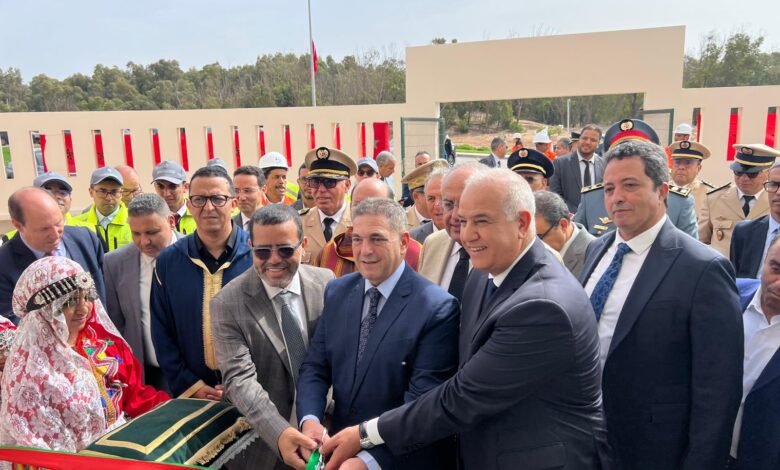
Official Launch of M’Zar Wastewater Treatment Plant: A Milestone for Souss-Massa
On Friday, July 24, 2026, the Souss-Massa Multiservices Company (SRM Souss-Massa) officially inaugurated the M’Zar wastewater treatment plant (STEP M’Zar) following extensive rehabilitation and expansion work on this strategic infrastructure. The ceremony was presided over by the wali of the Souss-Massa region and governor of the Agadir Ida-Outanane prefecture, Said Amzazi, alongside the governor of the Inzegane-Aït Melloul prefecture, Mohamed Zhar, the president of the Souss-Massa Territorial Communities Association, and the general director of SRM Souss-Massa, Mohamed Amrzak. It was also attended by several elected officials, local leaders, and representatives from civil and military authorities.
This inauguration is part of the celebrations marking the 27th anniversary of His Majesty King Mohammed VI’s accession to the Throne.
One of the Kingdom’s Most Significant Wastewater Treatment Plants
The rehabilitation, expansion, and operationalization project for the M’Zar station represents one of the largest environmental undertakings by SRM Souss-Massa since its establishment. It aims to enhance the capabilities for recycling treated wastewater, reduce pressure on conventional water resources, and support the region’s demographic and urban growth.
This infrastructure aligns with the national strategy for promoting non-conventional water resources and enhancing water security, consistent with sustainable development goals.
An Investment Exceeding 905 Million Dirhams
The project is part of the priority program for liquid sanitation and drinking water supply to the Agadir Ida-Outanane and Inzegane-Aït Melloul prefectures for the period 2022-2026.
It received joint funding from the National Integrated Liquid Sanitation Program, the Directorate General of Local Authorities, the Souss-Massa Region, and the relevant local authorities, while SRM Souss-Massa oversaw the project execution.
The total investment stands at 905.96 million dirhams, with a completion period of 16 months. The work was carried out by the company SNCE, under the oversight of the TECNITAS bureau, with technical assistance from the CID bureau, all in accordance with the latest technical and environmental standards.
Capacity Increased to 144,000 m³ Per Day
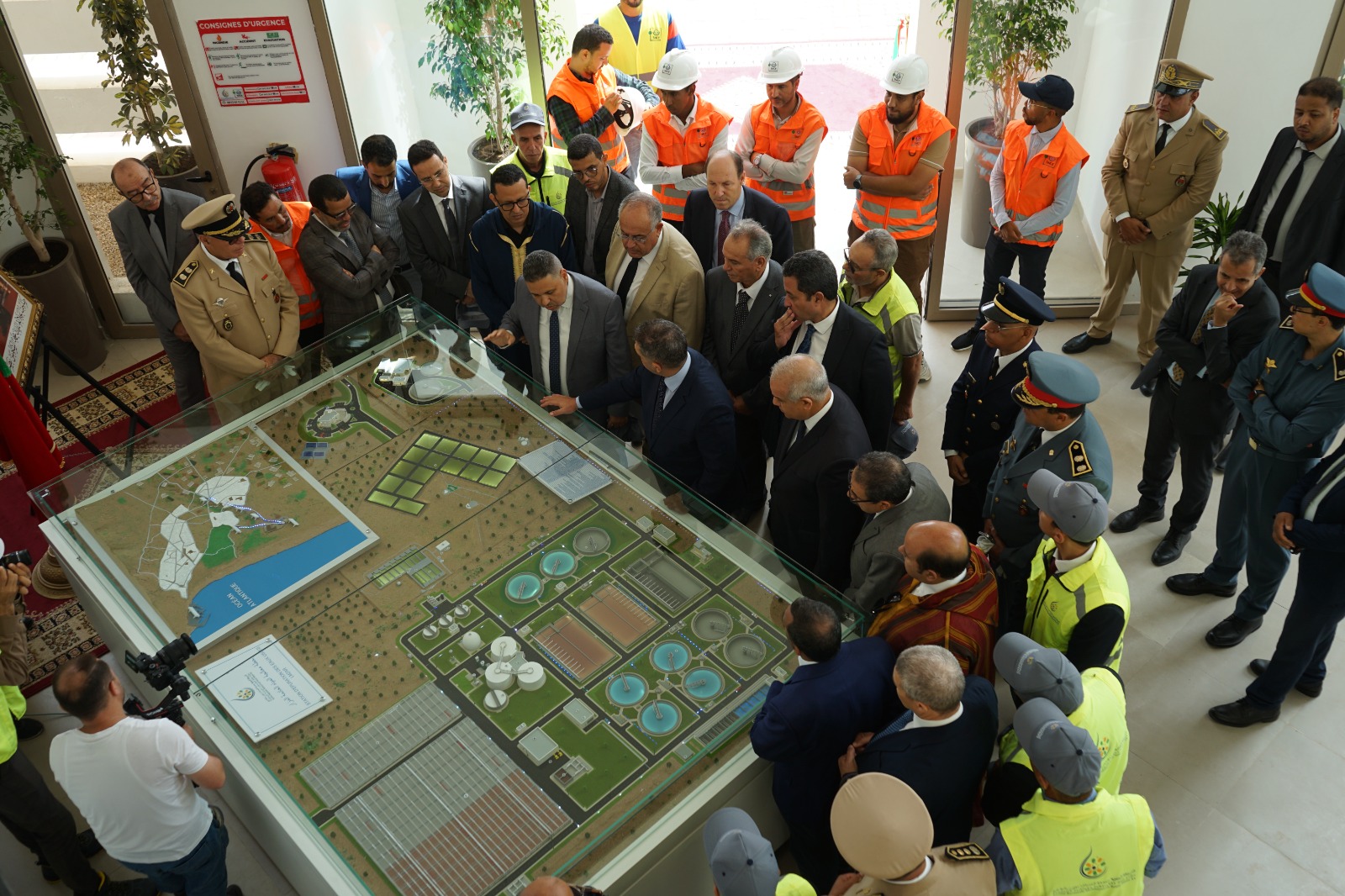
The expansion facilitated the construction of a new treatment unit, boosting the plant’s overall capacity to 144,000 m³ of treated wastewater per day by 2040.
Additionally, the extension doubled the production capacity of treated water for reuse, increasing it from 30,000 m³ to 66,000 m³ per day, solidifying the M’Zar station’s position as one of Morocco’s largest facilities dedicated to wastewater treatment and reuse.
Modern Technologies Supporting Sustainability
The station employs modern biological treatment processes for domestic wastewater, allowing for its reuse in the irrigation of green spaces and other environmentally compliant applications.
The infrastructure also features biogas recovery units, advanced odor treatment systems, a research and development center, and various technical facilities aimed at optimizing the environmental and operational performance of the plant.
A Strategic Project for Water Security
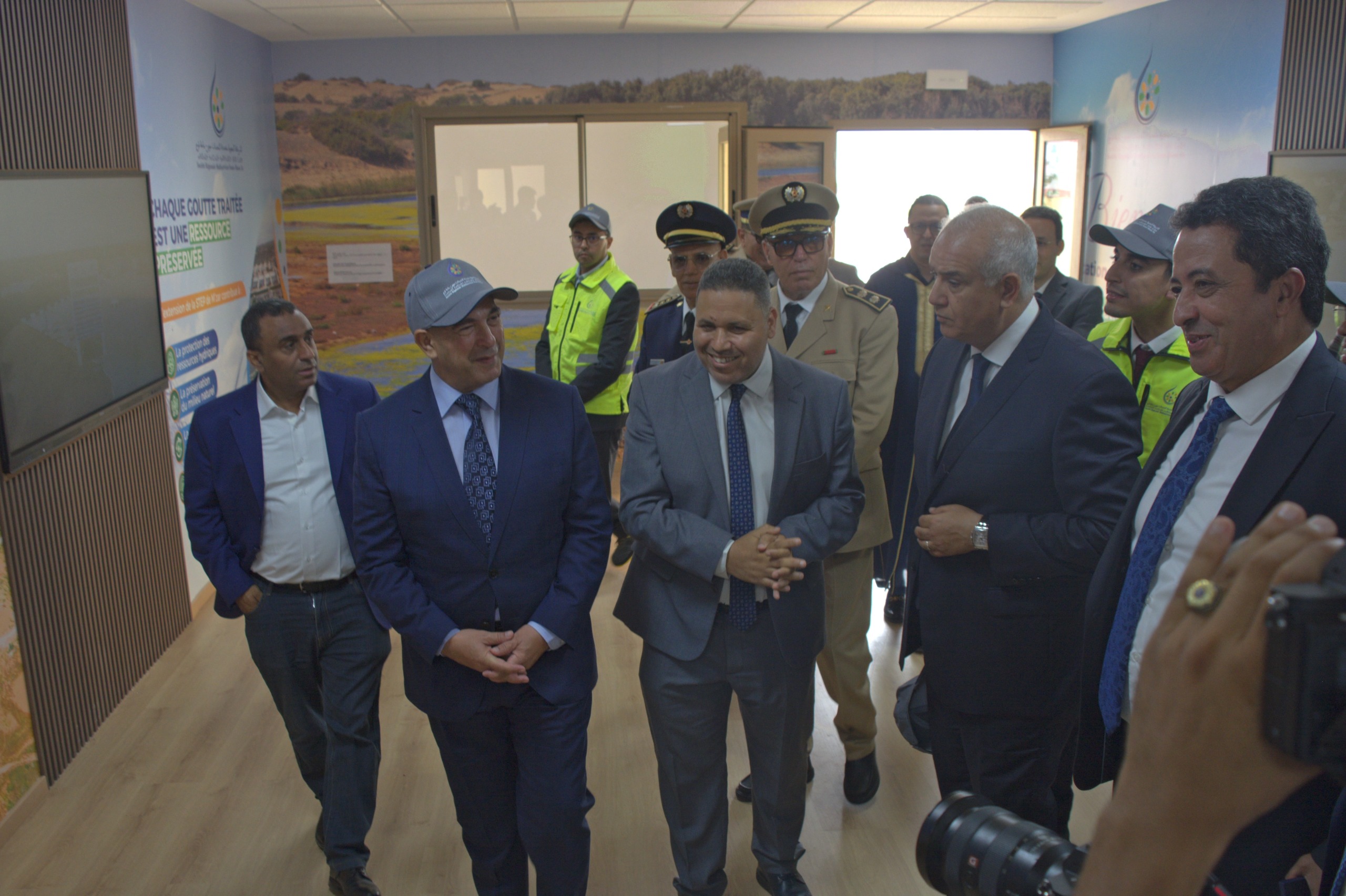
During the inauguration, the technical teams from SRM Souss-Massa showcased the various stages of the wastewater treatment process, the equipment installed, and the mechanisms for reusing treated water.
This project represents one of SRM Souss-Massa’s key investments, led by Mohamed Amrzak, in the areas of drinking water, liquid sanitation, and the reuse of treated wastewater. It contributes to strengthening the region’s water security, improving public service quality, and supporting economic and urban development in Souss-Massa, in line with Royal High Directions regarding sustainable water resource management.
Following the visit, the official delegation discovered the various technical components of the station, which is set to play a crucial role in enhancing the region’s environmental infrastructure and promoting the strategic reuse of treated wastewater as a crucial solution to water stress and climate change challenges.