OCP and CHS: Morocco Establishes Itself at the Core of the American Fertilizer Strategy
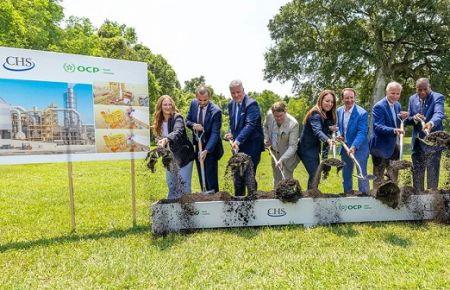
After several years of trade tensions regarding Moroccan phosphate fertilizers, OCP and the American agricultural cooperative CHS have taken a significant step forward by establishing a joint venture aimed at producing phosphate fertilizers in the United States.
Announced on August 26 in Waggaman, Louisiana, the project represents an investment that could reach $450 million, approximately 4.16 billion Moroccan dirhams. The future facility is expected to have a capacity exceeding one million tons of phosphate fertilizers per year.
This project marks an important shift in the relations between Morocco and the United States in the fertilizer sector. Following years of customs and legal proceedings, the Moroccan group is now poised to become a leading industrial partner, enhancing the supply for the American agricultural market.
### An American Facility Powered by Moroccan Phosphoric Acid
The industrial model chosen emphasizes a complementary relationship between the two partners. OCP will supply phosphoric acid from Morocco, while the American facility will utilize ammonia available on the Waggaman site to produce ammonium phosphates specifically for the American agricultural market.
Thus, the upstream part of the value chain will mostly remain located in Morocco, particularly concerning the production of raw phosphate material and its conversion into phosphoric acid. In the United States, operations will primarily focus on granulation, packaging, and marketing of the fertilizers.
The partners plan to initiate construction in the first or second quarter of 2027, pending necessary approvals. The facility is expected to be operational between late 2028 and early 2029.
### Morocco Holds Nearly 68% of Global Phosphate Reserves
Morocco’s significant role in this project is primarily due to its considerable phosphate resources. According to data from the U.S. Geological Survey (USGS) published in February, the Kingdom has approximately 50 billion tons of phosphate reserves, out of a global total estimated at 73 billion tons. This means Morocco accounts for nearly 68% of the world’s phosphate reserves.
In 2025, the country produced about 36 million tons of marketable phosphate rock, ranking behind China, which produced 110 million tons, but ahead of the United States with 20 million tons.
Global demand remains strong, with the consumption of P₂O₅ from fertilizers reaching 47.8 million tons in 2025 and projected to approach 51.5 million tons by 2029. Washington has notably included phosphate rock on its official list of critical minerals as of November 2025.
### Why Waggaman Was Selected
The choice of Louisiana is also driven by industrial and logistical logic. The future facility will be located in the Cornerstone Energy Park, an industrial site with direct access to the Mississippi River. The park features a significant riverfront and proximity to infrastructures already dedicated to the production of fertilizers and chemicals.
The site also hosts an ammonia unit operated by CF Industries, a particularly important element for the OCP-CHS project, as ammonia is one of the essential inputs needed for the production of ammonium phosphates.
The location further provides direct access to river networks, enabling the transport of products to major agricultural regions in the United States, particularly the Midwest.
### OCP Moves Closer to the American Market After Five Years of Customs Tensions
The project comes after a prolonged period of trade disputes between OCP and the United States. In 2021, following a complaint from the American producer Mosaic, Washington imposed duties on certain Moroccan phosphate fertilizers.
The rate of these duties fluctuated throughout the proceedings and reviews. In December 2025, the U.S. International Trade Court reduced the duty to 2.11%, before the U.S. government withdrew its appeal in March 2026.
Simultaneously, a presidential proclamation issued on June 29, 2026, temporarily suspended, for eight months, the anti-dumping and countervailing duties targeting Moroccan phosphate fertilizers. However, this suspension is set to expire in February 2027.
In this context, producing directly in the United States allows OCP and CHS to bring production closer to the end market and reduce the project’s exposure to the customs mechanisms applied to imports.
### American Support Requested to Strengthen Local Production
The joint venture is also seeking to benefit from the financial support offered by Washington to enhance domestic fertilizer production. OCP and CHS have submitted a request under the Fertilizer Investment & Expansion for Long-term Domestic Supply program, which has $500 million allocated by the U.S. Department of Agriculture.
The program offers grants ranging from $15 million to $150 million, with mandatory matching funds from the recipients. It specifically targets projects that diversify U.S. supply and develop production capabilities on domestic soil.
The Waggaman project aligns perfectly with this strategy by combining Moroccan raw materials with industrial processing conducted in the United States.
### Up to 924 Direct Jobs and Associated Services
The project is expected to generate approximately 60 permanent jobs once the facility is operational. The construction phase, on the other hand, could create nearly 500 jobs.
Additionally, the partners anticipate a total of 924 direct jobs and associated service positions related to the project. Beyond job creation, the main priority remains ensuring a stable supply of phosphate fertilizers for American farmers.
The United States still largely depends on imports to meet its phosphate fertilizer needs amid a backdrop of trade tensions, export restrictions, and disruptions in international supply chains.
### A New Step in OCP’s International Strategy
For OCP, the American project represents more than just an industrial establishment. The group maintains control over a strategic part of the value chain in Morocco, particularly through access to phosphate reserves and the production capacities of phosphoric acid, while developing processing capabilities closer to farmers in the United States.
This organization allows the Moroccan group to strengthen its presence in a major agricultural market while addressing American priorities for supply security.
After several years of trade disputes, the relationship between OCP and the United States appears to be evolving towards a model more focused on investment, local production, and industrial cooperation.
The Waggaman project could thus represent a significant turning point for the American fertilizer industry and simultaneously reaffirm Morocco’s strategic position in the global fertilizer supply chain.