Japanese Companies in Morocco: 65,000 Jobs by 2025
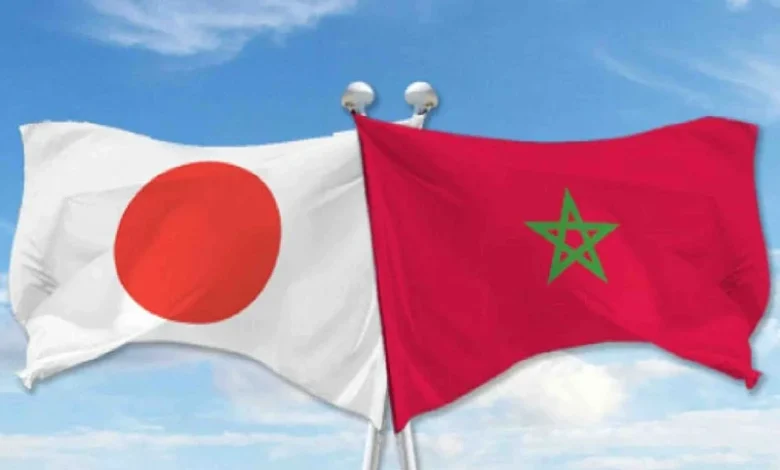
The presence of Japanese companies in Morocco continues to grow in significance. According to the latest data from the Japanese Ministry of Foreign Affairs, there were 76 Japanese establishments recorded in the Kingdom as of October 1, 2025, compared to 75 the previous year.
However, it is the number of jobs associated with these companies that is witnessing a remarkable increase. The workforce has risen from 50,000 to 65,000 positions in just one year, representing a 30% increase. This development indicates that Japanese investment in Morocco is increasingly reliant on strengthening existing industrial capacities rather than merely adding new companies at a rapid pace.
The Automotive Industry at the Heart of Japanese Presence
The automotive industry serves as the primary driver of this presence. Japanese companies are particularly active in electric harnesses, automotive components, and equipment for production lines.
Among the most prominent groups are Sumitomo Electric, Yazaki, Fujikura, Denso, Furukawa Electric, and JTEKT. Their activities are mainly concentrated around the major automotive hubs of Tangier, Kenitra, and Meknes.
This industrial establishment explains why a relatively limited number of companies can generate tens of thousands of jobs.
The case of Yazaki is particularly telling. In 2025, the group operated six production units in Tangier, Kenitra, and Meknes, employing approximately 17,000 people. This Japanese manufacturer of electrical harnesses alone accounted for more than a quarter of the jobs attributed to Japanese companies in Morocco.
Morocco Gains Ground in Japanese Industrial Strategies
By early 2026, the Japan External Trade Organization (Jetro) estimated that about 70 Japanese companies were established in Morocco, ranking the Kingdom third in Africa, behind South Africa and Kenya.
Political and social stability is among the primary arguments put forth by Japanese companies when evaluating their business environment. However, other factors also enhance Morocco’s attractiveness.
Proximity to Europe, port infrastructure, competitive production costs, and technical training programs are all advantages for manufacturers seeking new production capacities.
This trend is taking place amid rising costs in several regions of Central Europe, Eastern Europe, and Turkey. As a result, international groups are reassessing their supply chains and industrial locations, which could favor Morocco.
Tangier Med: A Major Asset
The industrial ecosystem developed around Tangier Med plays an important role in this dynamic. The platform hosts more than 1,400 companies of various nationalities and generates approximately 130,000 jobs.
Japanese groups have developed activities over several years in wiring, electrical components, mechanical parts, and various systems for the automotive sector.
Their production serves both manufacturers based in Morocco and European markets, thus capitalizing on the Kingdom’s geographic position and logistical infrastructure.
Moreover, Japanese presence is beginning to diversify. Beyond the automotive sector, Japanese companies are also active in logistics, industrial equipment, electronics, energy, trade, and consumer goods.
Morocco-Japan Trade Reaches 5.5 Billion Dirhams
The economic relationship between the two countries is also reflected in a relatively balanced bilateral trade.
In 2025, trade between Morocco and Japan reached approximately 94.8 billion yen, equivalent to nearly 5.5 billion dirhams.
Morocco exported goods worth approximately 47.3 billion yen to Japan, which is about 2.75 billion dirhams, while Japanese exports to Morocco amounted to 47.5 billion yen, or roughly 2.76 billion dirhams.
Despite this balance in value, the nature of the exchanges remains quite different.
Japanese exports to Morocco are dominated by transport equipment, accounting for 51.6% of the total. Electrical equipment makes up 21.1%, while general machinery represents 8%.
Conversely, food products are the primary category of Moroccan exports to Japan, making up 42.5% of the total. This is followed by clothing and accessories at 16.9%, and chemical products at 14%.
Japanese Investments Remain Volatile
Annual flows of direct Japanese investments in Morocco exhibit significant fluctuations.
According to data from the Bank of Japan cited by Jetro, net Japanese investments in Morocco reached 1.5 billion yen in 2025, equivalent to about 87 million dirhams. This was up from only 100 million yen in 2024, after peaking at 8.7 billion in 2023.
However, these annual fluctuations do not necessarily reflect the gradual development of Japanese industrial presence, which has been built up over multiple investment cycles.
The legal framework between the two countries has also been reinforced. Since April 2022, Morocco and Japan have had a bilateral agreement regarding investment protection as well as a convention to avoid double taxation.
New Opportunities on the Horizon
Japanese exploration continues in 2025. In March, Jetro organized a mission focused on the automotive sector, featuring visits to several manufacturers in Morocco, including Yazaki, Sumitomo Electric, Mitsui Kinzoku Act, and Furukawa Electric.
Some participants discussed the potential for developing new industrial or commercial capacities within the Kingdom.
A few months later, the Tangier Med Special Agency continued this endeavor in Japan through meetings held in Osaka, Nagoya, and Tokyo, aimed at showcasing the opportunities offered by the Moroccan industrial platform to Japanese companies.
With 65,000 jobs and 76 establishments, the Japanese presence in Morocco has thus reached a new milestone. While the number of companies still varies gradually, the increase in workforce indicates a significant deepening of the Japanese industrial apparatus within the Kingdom.