Olive Farming: Morocco Regains Nearly 2 Million Tons
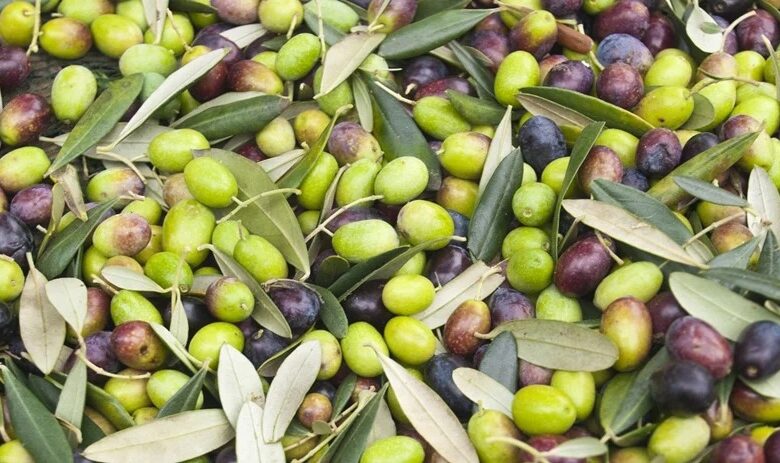
Moroccan Olive Sector Sees Significant Recovery for the 2025-2026 Season
The Moroccan olive sector is experiencing a robust comeback for the 2025-2026 campaign, with olive production estimated to reach nearly 2 million tons. This marks a remarkable increase of 111% compared to the previous season. This strong resurgence follows two years plagued by drought effects and revitalizes a sector that plays a crucial role in both national agriculture and the agro-industry.
Morocco’s olive orchards cover over 1.1 million hectares, with more than 900,000 hectares deemed productive. The Interprofessional association estimates around 1.2 million hectares planted, with nearly 37.5% of these areas under irrigation.
A Production Return to High Levels
Moroccan olive production has experienced significant fluctuations in recent years. It reached 1.968 million tons in 2021-2022, then fell to 1.086 million tons in 2022-2023, and slightly recovered to approximately 1.072 million tons in 2023-2024.
The rebound to near 2 million tons for 2025-2026 signals a substantial improvement. However, this performance is closely tied to climatic conditions and water availability, two factors that have become critical for the sustainability of Moroccan orchards.
The sector encompasses around 480,000 producers and accounts for over 65% of the land dedicated to tree crops. The Moroccan Picholine variety dominates plantations, comprising over 90% of the orchards, alongside other varieties such as Haouzia, Menara, Dahbia, Mesllala, Arbequina, Arbosana, Picual, and Frantoio.
Fès-Meknès Leads Olive Production Regions
Production remains concentrated in several major agricultural regions. Fès-Meknès is the top national olive basin, followed by Marrakech-Safi, Tanger-Tétouan-Al Hoceima, l’Oriental, and Béni Mellal-Khénifra.
These five regions collectively represented nearly 89% of the production in the 2022-2023 campaign, underscoring their significance in the organizational framework of the sector.
The harvest caters to various markets. Approximately 67% of olives are directed towards oil extraction, 23% for canning, while nearly 10% are attributed to losses and self-consumption.
Crushing Capacity of 1.8 Million Tons
Morocco boasts a substantial industrial apparatus for processing its production. The country has about 948 modern and semi-modern crushing units, with a combined capacity approaching 1.8 million tons of olives per year. This is complemented by nearly 11,000 traditional milling units.
Fès-Meknès accounts for around 62% of national crushing capacities, while Marrakech-Safi holds nearly 16%.
The production of olive oil has also seen notable fluctuations in recent years. It reached about 200,000 tons in 2021-2022, then dropped to 107,000 tons in 2022-2023 and nearly 106,000 tons in 2023-2024.
For 2025-2026, the Ministry of Agriculture forecasts a return to approximately 200,000 tons, reflecting a 105% increase.
Quality: A Central Challenge for Moroccan Oil
Beyond volume, the quality of the oil is a determining factor for enhancing production value. According to data from the Interprofession, extra virgin oil typically represents between 10% and 15% of the output, while virgin oil accounts for between 25% and 35%.
Common oil constitutes around 20% to 25%, while the share of lamp oil can reach 25% to 40%. These differences highlight the sector’s potential for growth in terms of quality, preservation, packaging, and marketing.
Table olives represent another significant pillar of the activity. Modern units have a capacity of approximately 203,000 tons per year, while industrial production usually ranges from 130,000 to 150,000 tons. The traditional sector can add between 150,000 and 200,000 tons.
Between 70% and 75% of industrially produced table olives are destined for export. In contrast, olive oil is predominantly consumed in the domestic market, absorbing roughly 84% to 85% of production.
Significant Export Potential
From 2018 to 2022, Moroccan olive product exports averaged 117,200 tons annually. Table olives comprised 87.3% of this, while olive oil accounted for 12.6%, with an average value close to 1.92 billion dirhams.
In 2024, Morocco exported approximately 8,593 tons of virgin olive oil, valued at nearly $79.7 million.
These figures indicate that the export potential of the sector is still largely tied to table olives, while olive oil has room for development in international markets, particularly through improvements in quality, packaging, and the branding of Moroccan products.
Aiming for 3.5 Million Tons by 2030
The 2021-2030 program contract sets ambitious goals for the sector. It aims to expand the olive orchard to 1.4 million hectares and increase production to 3.5 million tons of olives.
The program also targets a production of 270,000 tons of industrial table olives and exports of 100,000 tons of olive oil and pomace oil.
Achieving these objectives is accompanied by an investment program estimated at around 16.9 billion dirhams, with 8.3 billion coming from public contributions.
Producing More with Less Water
The rebound anticipated in 2025-2026 does not eliminate the challenges the sector faces. Climate change and pressure on water resources necessitate a gradual rethinking of production methods and improving the yield of farms.
The modernization of orchards, irrigation efficiency, the enhancement of agricultural practices, and the selection of varieties suited to new climatic constraints will be crucial for stabilizing production.
Leveraging by-products also represents significant potential. Pomace, pits, organic residues, and biomass can find markets in energy, fertilizers, cosmetics, or various derivative products.
For Morocco, the challenge now is not only to produce more olives. It’s about transforming a significant agricultural resource into greater added value by enhancing quality, processing, packaging, and marketing under Moroccan brands.
With its extensive orchards, a network of producers, processing capacities, and export potential, Morocco already has many strengths. The next challenge will be to consolidate this foundation to develop olive cultivation into a more competitive agri-food sector, resilient in the face of climate change and increasingly oriented towards international markets.