Bank of Africa Mobilizes $300 Million to Finance a Strategic Road in Guinea
Bank of Africa Secures $300 Million International Syndicated Loan for Strategic Infrastructure Development in Guinea
Bank of Africa, through its subsidiary Bank of Africa United Kingdom PLC, has successfully arranged an international syndicated loan of $300 million to finance the construction of the Labé–Banti–Tougué–Bafing River road. This 160-kilometer route is a key component of the Republic of Guinea’s transportation infrastructure development plan.
According to a statement from the banking group, this operation marks a significant milestone for Guinea, representing the country’s first fundraising effort in the international syndicated loan market as well as its entry into Islamic finance.
The financing package includes an Islamic tranche structured as a Murabaha and benefits from partial coverage by the Islamic Corporation for the Insurance of Investment and Export Credit (ICIEC). In this operation, Bank of Africa United Kingdom PLC acted as the Global Coordinator and Mandated Arranger, bringing together several leading international financial institutions.
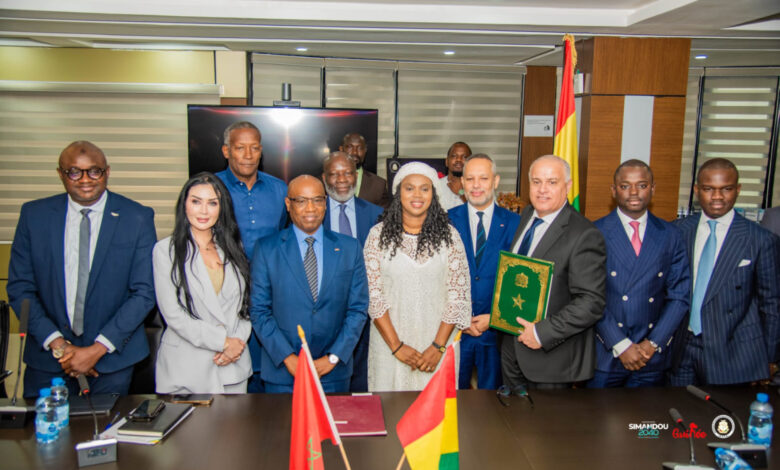
The signing ceremony, held in Conakry, was attended by Saïd Adren, Executive Director of Bank of Africa United Kingdom PLC, Zineb Tamtaoui, Executive Director of Bank of Africa Dubai, and the Guinean Ministers of Finance and Infrastructure. The Ambassador of the Kingdom of Morocco to Guinea also participated in the event, commending an initiative that showcases the capacity of African financial institutions to mobilize long-term funding for the continent’s development.
On this occasion, Khalid Nasr, Executive Director in charge of Morocco and Corporate & Investment Banking at Bank of Africa, emphasized that this operation reaffirms the group’s positioning as a leading African player in structuring and arranging complex financing for major infrastructure projects.
He also highlighted Bank of Africa’s ability to provide innovative financial solutions that blend conventional and Islamic finance to meet the growing infrastructure needs and economic development of African countries.