Blue Economy: Fishing Generates 14.8 Billion Dirhams in Morocco
The Blue Economy as a Catalyst for Growth and Employment in Morocco
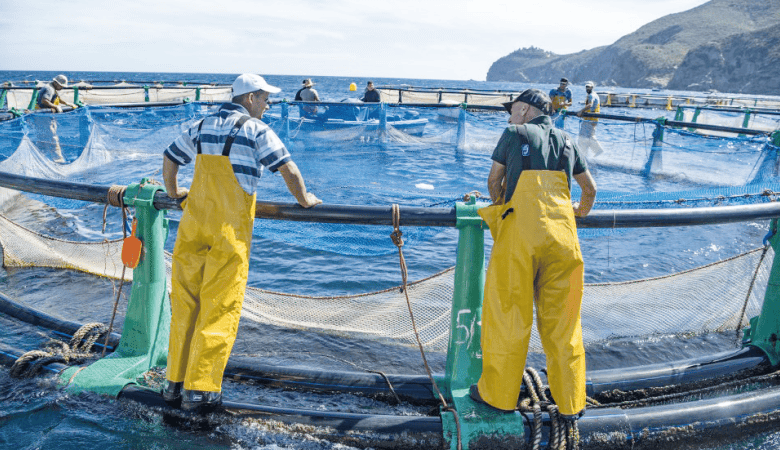
The blue economy represents a significant lever for growth and employment in Morocco. Maritime fishing alone generates a value added of 14.8 billion dirhams and nearly 159,300 jobs, according to a technical note published on October 20, 2026, by the World Bank. Nationally, sea-related activities produced 46.2 billion dirhams in 2022, accounting for 3.8% of the gross domestic product (GDP) and mobilizing the equivalent of 495,000 full-time jobs.
Fishing and Tourism: The Dominant Sectors of the Maritime Economy
Maritime fishing is one of the cornerstones of Morocco’s blue economy. With an estimated value added of 14.8 billion dirhams, it plays a vital role in the economic activities of coastal territories and the creation of jobs. Ports and maritime transport contribute approximately 3.7 billion dirhams in value added.
According to the World Bank, coastal tourism and fishing account for nearly 90% of the value added from maritime activities and over 470,000 jobs. These figures underscore the importance of two sectors closely linked to natural resources, coastal attractiveness, and the economic activities of coastal regions.
It is important to note that the wealth generated directly from ports is distinct from the value of the goods transiting through them. While international trade by sea supports numerous industrial and commercial activities, these are recorded under different sectors of the economy.
The scope of the blue economy includes coastal tourism, fishing, aquaculture, maritime transport, port activities, and various industries related to the sea. It should not be confused with the overall economic weight of coastal areas. A previous World Bank study estimated that these areas account for 59% of the national GDP, 52% of employment, and 81% of industry across all activities.
Public Spending Concentrated on Port Infrastructure
The distribution of public spending is one of the main insights from the report published in October. In 2024, expenditures on facilities, port infrastructure, transport, and logistics absorbed 69% of public spending dedicated to maritime sectors, in contrast to just 18% allocated to fishing.
This discrepancy highlights the need for balanced distribution of resources among the different components of the blue economy. Fishing remains a key sector for employment, representing nearly one in three blue jobs, according to the data presented by the institution.
The challenge is to ensure investment allocations that consider both the economic contributions of these sectors, their infrastructure needs, and their potential to create jobs. Modernizing ports is essential for Morocco’s commercial competitiveness, but the development of fishing and aquaculture activities also requires appropriate facilities and sustainable support for professionals.
A $350 Million Program to Develop the Blue Economy
This momentum is part of a results-based program dedicated to the blue economy, supported by a $350 million financing package approved by the World Bank in May 2022, which equates to approximately 3.43 billion dirhams at the current exchange rate.
The program encompasses several areas, including institutional frameworks, marine and coastal resource management, fishing, tourism, and aquaculture. It also benefits from a $5 million technical assistance fund, or around 49 million dirhams, provided by the Problue multi-donor trust fund.
On the ground, the interventions involve monitoring fish stocks, beach quality surveillance, and restoring coastal ecosystems. The plan also provides support for fourteen pilot aquaculture farms specializing in products such as seaweed and shellfish.
The goal is to enhance sustainable management of marine resources while fostering the development of economic activities that can generate new income and jobs in coastal regions.
Moroccan Aquaculture Facing Scale-Up Challenges
Despite its potential, aquaculture remains limited in Morocco. According to World Bank data, national production reached approximately 3,600 tons per year as of November 2025, while ambitions for the sector envision reaching 300,000 tons and creating 30,000 jobs within a decade.
At that time, the country had 322 authorized aquaculture farms, representing a theoretical capacity exceeding 124,000 tons annually. The gap between this capacity and actual production underscores the challenges of scaling up operations.
The World Bank notes the lack of hatcheries, feed mills, refrigeration equipment, and processing units as significant obstacles. Additionally, financing needs, technical training, and business support stall the development of this industry.
However, several sub-sectors are seen as promising, including shrimp farming, shellfish aquaculture, and the cultivation of marine algae. VitaminSea Morocco, a Moroccan shrimp producer identified among the pilot projects, reported an annual production of around 60 tons for the domestic market, with a goal of 300 tons. The company sourced its larvae from American suppliers. Setexam, a specialist in marine algae, is also among the highlighted experiences in the institution’s reports.
However, the consolidation of these activities requires enhancing production capabilities, marketing circuits, and storage and processing infrastructure.
Coastal Tourism Confronted with Climate Risks
Coastal tourism is another pillar of Morocco’s blue economy, yet it is exposed to the effects of climate change. According to a technical note from the World Bank published in June 2024, this segment represented approximately 300,000 direct jobs in 2019 out of a total of 565,000 jobs in national tourism.
The coasts of Agadir, Tangier, Tetouan, and Casablanca are among the main hubs for this activity. In the Souss-Massa region, coastal resorts accounted for nearly 70% of tourist demand, according to the same analysis.
Climate projections presented in this note indicate significant economic risks. Depending on the scenarios considered, visitor spending could decline by 8% to 18% by 2035, while job losses in the most exposed coastal tourism segments, particularly accommodation and food services, could approach 32%.
These risks extend beyond the tourism sector. A previous World Bank study estimated average annual losses linked to coastal erosion in Morocco at $434 million, or approximately 4.25 billion dirhams. Annual damages caused by flooding were estimated at about $450 million, or 4.41 billion dirhams. These two estimates pertain to distinct risks and do not exclusively measure losses from the blue economy.
A National Strategy for Sustainable Coastal Development
According to the World Bank, the development of the blue economy requires an integrated approach that encompasses infrastructure, skills, natural resource management, and the economic viability of sectors. Investments in ports, fishing, aquaculture, and tourism should include maintenance costs for facilities and imperatives for the preservation of coastal ecosystems.
The publication on October 20 comes as Morocco prepares its national strategy for maritime activities in the context of the inter-ministerial commission for the blue economy. An earlier note from the World Bank had already provided technical support for this initiative.
The challenge now is to transform the economic weight of the sea into more inclusive and sustainable growth. Fishing and tourism offer a strong economic foundation, while aquaculture presents opportunities for diversification. The success of this strategy will depend on the ability to coordinate public investments better, support businesses, and preserve the resources upon which coastal activities rely.