Capital Markets: 1.2 Trillion Dirhams in Savings, the Challenge for SMEs
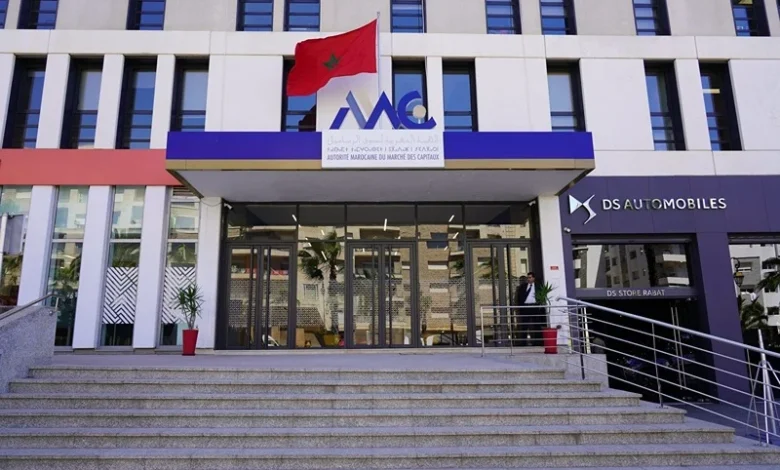
Morocco possesses a financial savings landscape that is scaling up. By the end of 2025, the financial assets of households reached 1.192 trillion dirhams. The challenge now is to better connect this pool of capital with companies that invest, innovate, and aim to scale up. This is precisely the initiative launched by the AMMC (Moroccan Capital Market Authority) in collaboration with the CGEM (General Confederation of Moroccan Enterprises).
Within the figures of the Moroccan capital market lies a paradox that deserves attention. The money is available. Investors are present. Financial instruments are diversifying. Yet, access for SMEs to these resources remains limited.
By the end of 2025, the financial assets of Moroccan households stood at 1.192 trillion dirhams, of which 935 billion were in the form of bank deposits and 114 billion were invested in securities. In addition to this savings, over 600 billion dirhams of financial assets are held by insurance companies and pension funds. The base of investors is also expanding: the number of securities accounts exceeded 430,000 in the first quarter of 2026, nearly three times its level in 2020.
The potential is, therefore, considerable. The challenge remains to facilitate its flow towards the productive economy.
A Market That Has Grown in Scope
The Moroccan capital market is no longer merely a stock exchange; it has gradually transformed into a much broader financing platform.
The capitalization of the Casablanca Stock Exchange reached 1.0407 trillion dirhams in 2025, while the volume of private debt stood at 331.8 billion dirhams. Investment funds alone accounted for 785.1 billion dirhams in net assets, along with 134 billion for real estate investment funds.
This depth is an asset. However, it raises a new question: how to ensure that more SMEs can access this financial power?
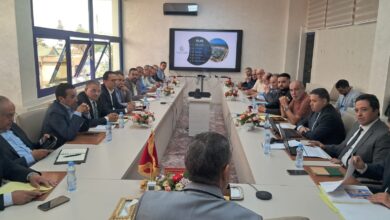
This is the essence of the meeting organized on September 28 in Casablanca by the AMMC and the CGEM under the theme “Capital Markets and SME Financing.” The message from Tarik Senhaji, President of the AMMC, is clear: the market has gained depth; it now needs to gain proximity.
Changing the Mentality
The change is not merely about multiplying financial products. It is primarily about starting from the needs of businesses.
An industrial SME wanting to build a new unit, an exporting company needing to finance its development, or a technology firm aiming to accelerate its growth do not have the same needs or the same financial maturity.
According to the AMMC, market players must therefore intervene earlier, understand the trajectories of businesses, and build solutions around the projects to be financed. This is an important shift: moving from a logic where the business seeks available financial instruments to a logic where financing is constructed from its needs.
The issue is even more strategic given that SMEs are not only lacking capital; they must also prepare to receive it.
SMEs Must Also Scale Up
Accessing the market imposes certain requirements. Governance, transparency, quality of financial information, and management structuring: a company cannot enter the world of capital markets without having strengthened its fundamentals.
The CGEM emphasizes this preparation. A stock market introduction, for instance, cannot be decided at the last moment. It is built several years in advance, with a focus on governance, management, and the reliability of financial information.
Thus, the challenge is twofold: making the market more accessible to SMEs while also aligning more SMEs with market requirements.
The AMMC specifically plans to promote mechanisms that aggregate financing needs from SMEs to create diversified portfolios that are more attractive to investors. This approach is already included in its strategic plan for 2024-2028.
From Savings to Productive Financing
The real challenge ultimately extends beyond just the stock market. It concerns the ability of the Moroccan financial system to transform abundant savings into productive capital.
For households and institutional investors, this means more opportunities to indirectly finance companies. For SMEs, this may open up an alternative or a complement to traditional banking credit. For the Moroccan economy, the goal is to connect long-term resources with long-term needs: industrial investment, innovation, exports, digitalization, or international expansion.
Morocco now has a capital market that has reached a critical mass. The next step will be more demanding: ensuring that this financial depth translates into more businesses capable of growing through the market.
Therefore, the 1.2 trillion dirhams in household savings is not just a statistic. It raises an important question about economic transformation: how can we shift more of this savings from being idle wealth to financing growth?