DHL Ranks Morocco as a Priority Logistics Market
DHL Group Expands Its Strategic Reach in Morocco
Morocco is gaining a prominent role in DHL Group’s international strategy. The German transport and logistics giant has integrated the Kingdom into its priority international markets as part of its "Geographic Tailwinds" program, which targets economies poised to benefit from the transformations in global trade and new industrial setups.
This strategic direction was presented during the Tangier Logistics Days, coinciding with industrial groups reconfiguring their supply chains, diversifying sourcing, and gradually relocating some production capacities closer to their main consumer markets.
Morocco at the Heart of New Logistics Chains
For DHL, Morocco’s attractiveness lies notably in its already established industrial fabric in sectors such as automotive, aerospace, agribusiness, and other export-oriented industries. Its geographical proximity to Europe and its role as a bridge to African markets further enhance its appeal in the current context of restructured trade flows.
The "Geographic Tailwinds" program precisely identifies economies in which DHL sees potential for higher growth driven by foreign direct investments, shifts in trade currents, and the relocation of certain industrial capabilities.
However, Morocco’s inclusion in this initiative does not imply the announcement of a new logistics facility or specific investment. Instead, it reflects an evolution in the group’s market prioritization and the prospects it associates with the development of its clients’ industrial activities.
Over 400 Employees Already in Morocco
DHL already has a significant presence in Morocco, employing more than 400 people across its various transport and logistics operations.
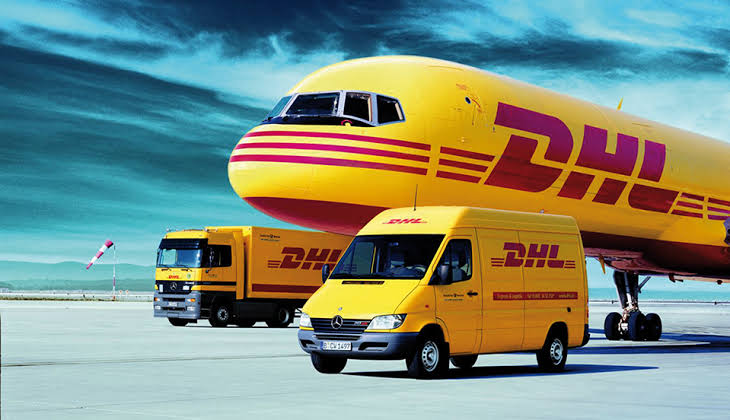
DHL Express, active in the country since 1987, operates nine service centers and 23 sales points. Its infrastructure includes a fleet of 147 vehicles and two cargo planes dedicated to routes involving Morocco.
This infrastructure serves as an operational base for the group to support the evolution of international exchanges and the increasing prominence of export-driven companies established in the Kingdom.
Two Planes Connecting Casablanca and Tangier
DHL’s air network connects Casablanca and Tangier to international flows. This setup not only meets express delivery requirements but also addresses the needs of companies engaged in global supply chains.
The challenge extends beyond just the express market. The industrial presence of foreign groups in Morocco generates demand for the transportation of components, sourcing, shipping of finished products, and the organization of movements between various production sites.
Industrial Restructuring Stimulates Logistics Demand
DHL’s decision aligns with a broader transformation in global supply chains. Many manufacturers are now striving to reduce their dependence on a single country or source while bringing certain production stages closer to their end markets.
This evolution inevitably leads to a redistribution of goods flows and logistics needs. Air, sea, and road transportation are directly affected by this new industrial geography.
In this context, Morocco appears as a territory that stands to gain from the increased exchanges of components and finished products between Europe, Africa, and the industrial platforms established within the Kingdom.
DHL Anticipates Increasing Volumes
Morocco’s ranking among DHL’s priority markets underscores the anticipation of future growth in flows related to industrial investments and exports. At this stage, it does not involve a specific, quantified investment program announced by the group, but rather a strategic positioning aimed at supporting the evolution of its clients.
For Morocco, this recognition comes at a time when the country is striving to solidify its role as an industrial and logistics hub between Europe and Africa. The transformation of global supply chains could thus progressively bolster demand for transport infrastructure and services operating from the Kingdom.