Natural Phosphate: Morocco to Become the EU’s Second Supplier by 2026
Title: The European Union’s Phosphate Imports: Morocco’s Growing Role
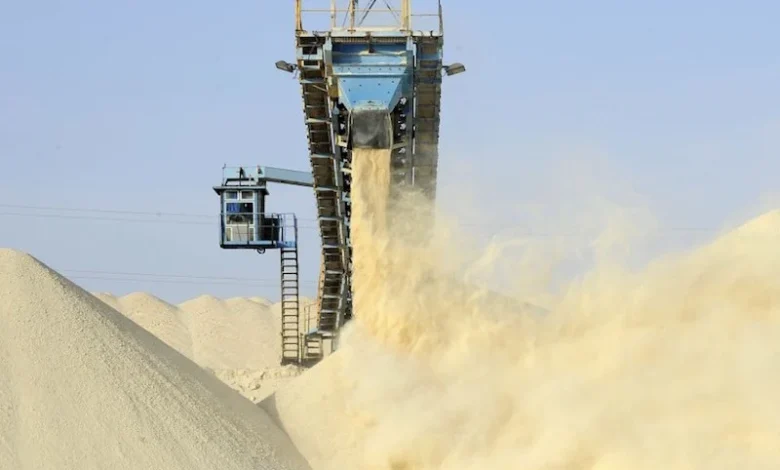
From January to September 2026, the European Union imported natural phosphate from Morocco worth €137 million (approximately 1.51 billion dirhams). An analysis released on Tuesday, October 27, by the Swedish group Ragn-Sells, which specializes in waste management and recycling, reveals that Morocco ranks as the second-largest supplier to Europe, trailing behind Russia, whose sales during the same period totaled €170 million.
These figures underscore Morocco’s significance in the European natural phosphate market as well as the increasing volume of Russian exports. They also highlight the distinction between imports of raw ore and processed phosphate products, an area where Morocco holds a prominent position.
Morocco Accounts for Over 30% of European Imports
With €137 million in sales in the first nine months of the year, Morocco constitutes approximately 30.6% of the European Union’s spending on natural phosphate imports from countries outside the EU. Russia leads with €170 million (~1.87 billion dirhams), commanding an estimated 38% market share. The gap between the two countries amounts to €33 million, with European purchases from Russian suppliers exceeding those from Morocco by nearly 24%.
South Africa claims the third slot with imports valued at €48 million (around 528 million dirhams), making up 10.7% of the relevant imports. Other supplying countries collectively contribute almost €92 million.
Based on these proportions, the European market for natural phosphate imported from third countries can be estimated at around €447 million for the period in question.
Russian Exports Increase in Q3
Available data indicates that competition between Moscow and Rabat has intensified throughout the year. In Q1 2026, the European Union imported €53.8 million of Russian natural phosphate, compared to €47.7 million from Morocco. Egypt stood in third place with €11.6 million.
By the end of June, European imports from Russia had reached €105 million, representing 34% of the total in value. Morocco closely followed with €98 million and a share of 32%, while Egypt totaled €24 million, accounting for 8%.
A comparison of the numbers from the first half of the year to those recorded by the end of September highlights approximately €65 million in Russian purchases during Q3, against €39 million for Morocco. These figures are indicative, as they arise from the differences between two successive publications, and the latest data from the European Commission remains provisional.
Over the first nine months of 2026, according to Ragn-Sells, Russian imports increased by 17% year-on-year, hitting their highest level for this period since 2016. This rise reflects an additional €25 million compared to the same timeframe in 2025.
Distinguishing Between Natural Phosphate and Processed Fertilizers
The €137 million attributed to Morocco exclusively concerns natural phosphate, which is the raw material extracted before its industrial transformation. This amount does not encompass Moroccan exports of phosphoric acid, diammonium phosphate, monoammonium phosphate, or compound NPK fertilizers.
This distinction is critical for accurately gauging Morocco’s actual standing in European trade. In 2025, when the analysis included a broader range of products encompassing phosphates, phosphated fertilizers, and compound fertilizers, Morocco emerged as the top supplier to the EU, with sales amounting to €1.6 billion (approximately 17.61 billion dirhams).
At that time, Russia held the second position with €890 million, ahead of Israel, Norway, and Tunisia. Thus, Moroccan exports of processed products represent a vital segment of European supplies, significantly surpassing the value of raw ore alone.
Phosphorus: A Strategic Raw Material for European Agriculture
The European Commission classifies phosphorite rock and phosphorus among critical raw materials. These resources are essential for producing mineral fertilizers and also play a role in animal feed production.
In agriculture, phosphorus plays an essential role and lacks direct substitutes for its primary applications. However, extraction capacities within the Union remain limited. According to data cited by Ragn-Sells, the only active phosphate mine in the EU, located in Finland, meets less than 10% of the agricultural needs of the 27 member states.
This dependence on imports highlights the emphasis on diversifying suppliers and securing sources. It also enhances interest in solutions that allow for the recovery of phosphorus from waste materials.
Ragn-Sells Advocates for the Development of Recycled Phosphorus
The analysis by Ragn-Sells is based on the European Commission’s agriculture directorate’s fertilizer trade dashboard. This tool aggregates customs data from Eurostat-Comext and European import monitoring statistics.
Simultaneously, the Swedish group champions the development of phosphorus recycling through its subsidiary EasyMining, which has developed the Ash2Phos process. This technology enables the recovery of more than 90% of phosphorus contained in the ashes resulting from wastewater treatment incineration.
Ragn-Sells is constructing its first industrial plant in Germany to produce recycled calcium phosphate. The group leverages the figures for European imports of both Russian and Moroccan natural phosphates to advocate for a shift in European regulations.
According to the company, current rules still hinder the use of recovered phosphorus in animal feed. Therefore, it seeks a review of this framework to facilitate the valorization of this secondary resource.
Beyond the competition between suppliers, the discussion revolves around Europe’s ability to reduce its dependence on imported raw materials. For Morocco, the challenge lies in consolidating its position in the European market for both natural phosphate and processed phosphate products, navigating a sector where supply security and circular economy considerations are becoming increasingly important.