
Tangier becomes the most expensive city in North Africa in terms of cost of living.
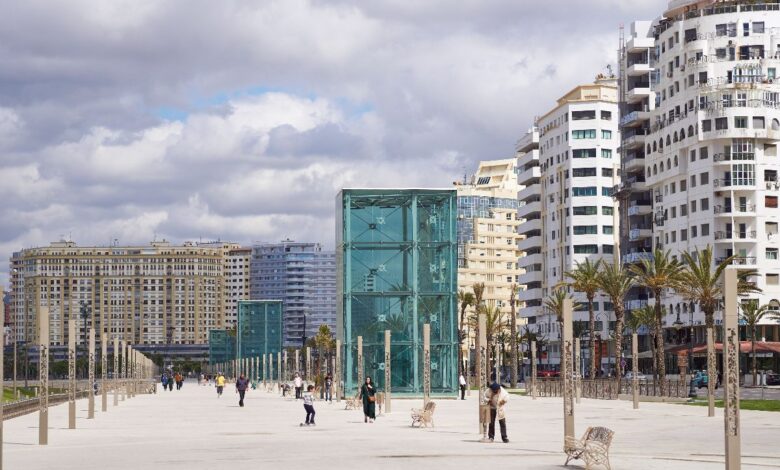
Tangier Emerges as North Africa’s Most Expensive City for Cost of Living in 2026
As of mid-2026, the city of Tangier has officially become the most expensive city in North Africa regarding the cost of living, according to the latest data released by the international platform Numbeo.
According to this ranking, the capital of the Detroit of Morocco holds a cost of living index of 36.3 points, placing it ahead of Casablanca (34.7 points), Rabat (34.2 points), and Marrakech (32.7 points).
With a lead of 1.6 points over Casablanca, Tangier also surpasses several major North African cities, including Tunis, Algiers, Cairo, and Alexandria.
The Numbeo index compares the everyday expenses of households, including prices for food, dining out, transportation, and various consumer services. However, rents are not included in the main cost of living index.
Data reveals that Tangier has a food index of 37.9 points and a restaurant index of 29.8 points. When rents are included, the cost of living index reaches 24.5 points, while the rent index is limited to 10.6 points.
These results indicate that the rising cost of living in the city is primarily attributed to increases in the prices of goods and services rather than housing costs. This trend can largely be explained by sustained demand driven by population growth and Tangier’s economic dynamism.
Indeed, the northern metropolis is experiencing significant development, spurred by the growth of its industrial and logistics sectors, the strategic role of the Tanger Med port, as well as an expansion in tourism and the city’s increasing attractiveness to investors.
Numbeo notes that its index does not measure inflation or changes in prices over time, but rather compares the cost of living levels between different cities, taking New York as a reference point with an index of 100.
According to this methodology, the cost of the consumption basket in Tangier represents approximately 36.3% of that observed in New York, excluding rent.
Additionally, the local purchasing power index stands at 39 points, highlighting a gap between the level of prices in the city and the purchasing capacity of some households, particularly in a context marked by rising expenses related to essential goods and services.