Morocco-India: Rabat and New Delhi Strengthen Their Partnership in Agricultural Research
Morocco and India Strengthen Agricultural Research Cooperation
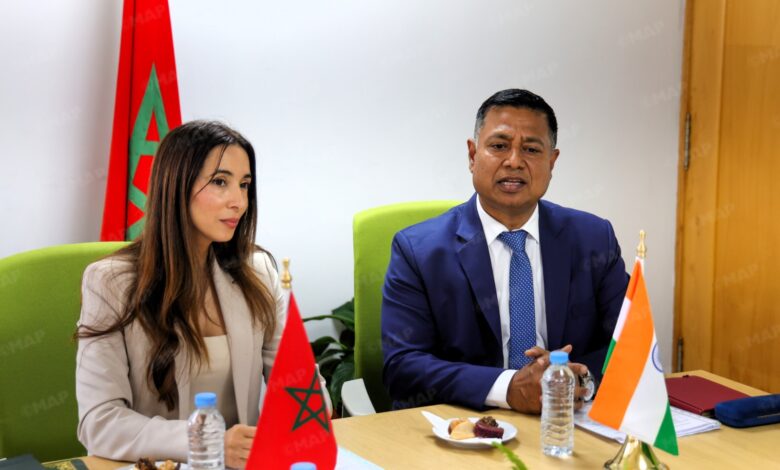
Morocco and India are advancing their collaboration in the field of agricultural research. This momentum was at the center of discussions held on Thursday in Rabat between Lamiae Ghaouti, the director of the National Institute of Agricultural Research (INRA), and Sanjay Rana, the Indian Ambassador to Morocco, in preparation for a new bilateral action program.
During this meeting, Ambassador Rana emphasized that the two countries share a long-standing cooperative relationship in agriculture, scientific research, and development. He recalled that the Indian Council of Agricultural Research (ICAR) and INRA have been collaborating for several years through researcher exchanges, sharing of expertise, and pooling of best practices.
The ambassador indicated that both institutions are currently developing a new work plan aimed at strengthening their partnership. This plan includes the development of joint research projects, the exchange of genetic resources, and the sharing of scientific results.
According to him, Morocco and India face similar challenges, particularly concerning water scarcity. Both countries aspire to develop innovative solutions to enhance agricultural productivity, improve soil fertility, and support food security, with a particular focus on legume crops.
For her part, Lamiae Ghaouti explained that this meeting aimed to fully integrate the agricultural research component into the forthcoming cooperation program between the two nations. The discussions covered several strategic areas, including legumes, agricultural mechanization, and tree cultivation, with a focus on olives, citrus fruits, and apple trees.
The director of INRA also highlighted the shared commitment of both parties to develop a concrete action plan shortly, aimed at revitalizing scientific cooperation and contributing to the sustainable development of the Moroccan and Indian agricultural sectors.
The partnership between INRA and Indian agricultural research institutions dates back to 1996. Since then, it has gradually strengthened through various cooperation agreements covering areas such as the exchange of genetic resources, biotechnology, biosaline agriculture, irrigation management, agricultural mechanization, technology transfer, capacity building, and researcher mobility.
Between 2013 and 2018, this cooperation materialized notably through the implementation of the IMILA project, which had a budget of 35.9 million dirhams, aimed at enhancing food security, improving the incomes of small farmers, and promoting sustainable agriculture.
The partnership has also placed significant emphasis on training and skill development through ICCR scholarship programs and e-ITEC training, benefitting seven INRA researchers between 2018 and 2024. This illustrates the commitment of both countries to deepen their scientific and technical collaboration.