Samir: The National Front Calls for the Revival of Refining in Morocco
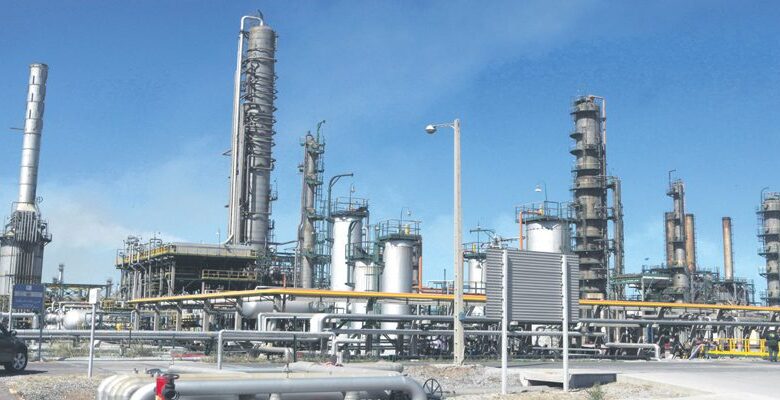
The National Front for the Preservation of the Moroccan Oil Refinery (FNSS) has reignited the debate regarding the future of Samir and Morocco’s energy sovereignty. This collective, which unites unions, political parties, and associations, is calling for the resumption of refining activities and is astonished that this issue is not part of the new government’s agenda, given that the Mohammedia refinery has been in judicial liquidation since 2016.
This mobilization comes eight months after a commercial court rejected an Emirati offer of $3.5 billion, approximately 34.44 billion dirhams, for the company’s assets. The absence of a buyer and uncertainties surrounding a potential restart continue to fuel demands for the revival of this strategic industrial tool.
The FNSS Repositions Energy Sovereignty at the Center of Debate
In an executive meeting, the National Front for the Preservation of the Moroccan Oil Refinery announced its intention to continue advocating alongside various stakeholders in the country. Their demands focus on energy sovereignty, the creation of added value, the preservation of jobs, and workers’ rights.
The collective also draws a connection between the shutdown of Samir and the high prices of fuels at the pump. Since its establishment on July 14, 2018, it has advocated for the reactivation of the refinery as a potential lever to enhance the country’s oil processing capabilities and reduce dependence on imported refined petroleum products.
In this context, the FNSS laments that the future of Samir is not on the new government’s priority list. For its members, the continuation of the liquidation process without a sustainable industrial solution leaves in limbo a question that goes beyond the company’s future alone.
Justice Previously Dismissed an Emirati Offer of $3.5 billion
The Casablanca commercial court declared the offer from MJM Investments Limited, a Dubai-based investment company, inadmissible on Friday, February 27. The judges cited the absence of a complete file and a firm and unconditional commitment, as well as a lack of binding timetable for the resumption of operations.
Letters sent to the president of the court indicated a proposal of approximately $3.5 billion for the acquisition of the refinery’s assets. According to the information provided, this was the highest bid submitted since the launch of calls for competition in 2017.
However, the investor conditioned its commitment on two requirements: full access to the Mohammedia site and a thorough technical assessment of the production units, storage capacities, and infrastructure. This approach was aimed at evaluating the condition of facilities that had been idle for over ten years and estimating the necessary work for a restart that meets industrial and environmental standards.
Judicial Evaluations Significantly Lower Than the Announced Offer
The amount proposed by MJM Investments far exceeded the estimates established in the judicial proceedings. Experts mandated by the court had valued all of Samir’s assets at $2.16 billion, roughly 21.25 billion dirhams. The value of the refinery alone was estimated at $1.49 billion, equivalent to 14.66 billion dirhams.
Based on an international assessment, the court-appointed judge hoped for a transfer around $2.5 billion, nearly 24.6 billion dirhams. In February 2023, the Casablanca commercial court reopened the call for bids based on an approximation of $2 billion and received fifteen proposals.
An expert in the energy sector assessed that the Emirati offer was disproportionate compared to the value of a portfolio diminished by certain assets, either sold or devalued since 2017. A source close to the case described the approach as “a pure bluff,” questioning the absence of sufficiently solid financial guarantees.
MJM Investments, a Profile More Aligned with Finance and Real Estate
Founded in 2017 by Emirati investor Musab Jassim, MJM Investments Limited presents itself as a private equity firm specializing in structured financial arrangements, mezzanine financing, leveraged buyouts, and growth capital.
Its activities are primarily focused on real estate in the United Arab Emirates and Turkey. The company claims a portfolio of $25 million, which is about 246 million dirhams. Its stated experience is thus centered around real estate and financial operations rather than industrial activities related to oil refining.
Its governance includes among others vice president Sheikh Adel Al-Qassimi, an Emirati lawyer; chief financial officer Anindya Chattopadhyay, described as a former banker specializing in financial engineering; and Edwin Lee Am, a board member from an international investment bank.
The investor also highlights a platform dedicated to strategic infrastructures in Morocco, developed with Canmoro Data. Additionally, the British investment bank Barclays had sent a letter of support indicating its willingness to consider accompanying and financing the acquisition, potentially up to its full amount. However, this potential support remained subject to the bank’s internal procedures, feasibility studies, risk assessments, and the necessary regulatory approvals.
The Nationalization Proposal Rejected by the House of Councillors
The debate surrounding the future of Samir has also taken on a political dimension. On June 16, the House of Councillors rejected a proposed law aiming to transfer the refinery’s assets to the state.
Proponents of the bill emphasized the importance of a public refining entity to strengthen national fuel reserves and ensure a consistent supply. The political bureau of the Party of Progress and Socialism (PPS) condemned this vote on June 23, criticizing the government’s refusal to cap fuel prices.
The recognized liabilities of Samir exceed 30 billion dirhams, more than half of which corresponds to public debts. Since 2016, the commercial court has renewed the authorization for the company to continue operations every three months. While waiting for a potential buyer, the trustee has obtained the right to generate income from the site’s storage capacities.
Nearly a Decade of Proceedings Without a Definitive Solution
Since the initial calls for competition, the court has dismissed about fifteen resumption proposals. Around twenty foreign investors expressed interest as early as 2017, including the Swiss commodity trader Glencore and the American fund Carlyle. The two entities were involved in a strategy to recover about $600 million, nearly 5.9 billion dirhams, in loans granted to the refinery prior to its bankruptcy.
In 2019, the company Petroen submitted a bid of 24 billion dirhams, based on the promise of a bank guarantee from Canaccord Genuity, established in Dubai, within fifteen days of being awarded.
However, these various attempts did not lead to an effective resumption of refining activities. The proliferation of bids, valuations, and judicial procedures illustrates the complexity of a case that intertwines financial stakes, technical constraints, and national strategic interests.
Samir: A Strategic Industrial Tool Stalled Since 2015
Founded by the state in 1959, Samir was designed to process up to 200,000 barrels of crude oil per day, approximately ten million tons annually. Its facilities have two million cubic meters of storage capacity.
Before halting production in August 2015, the refinery covered up to 65% of Morocco’s oil needs. Its shutdown occurred against a backdrop of debt nearing 40 billion dirhams. The Casablanca commercial court declared its judicial liquidation on March 21, 2016.
Privatized in 1997, the company came under the control of Corral Morocco Holdings, the holding company of Saudi businessman Mohammed Al-Amoudi, at a rate of 67.27%, for approximately four billion dirhams. The businessman later sought $2.7 billion in compensation from the Moroccan state.
In July 2024, the International Centre for Settlement of Investment Disputes (ICSID), affiliated with the World Bank, dismissed most of Corral’s claims.
Today, the future of Samir remains contingent upon finding a solution capable of reconciling asset values, financing requirements, restoration costs, and energy policy objectives. The renewed mobilization of the FNSS thus places the question of national refining at the heart of the debate on Morocco’s supply security, without a definitive decision about resumption or nationalization being announced based on the available information.