The African Development Bank funds the first LFP battery gigafactory in Morocco with €100 million.
The African Development Bank (AfDB) has approved financing of €100 million for Gotion Power Morocco to support the construction of Africa’s first integrated LFP (Lithium Iron Phosphate) battery factory.
The project will take place within the Atlantic Free Zone, located in the Rabat-Salé-Kénitra region, marking a significant step in the development of Morocco’s industry dedicated to electric mobility and green technologies.
An Integrated Factory Covering the Entire Production Chain
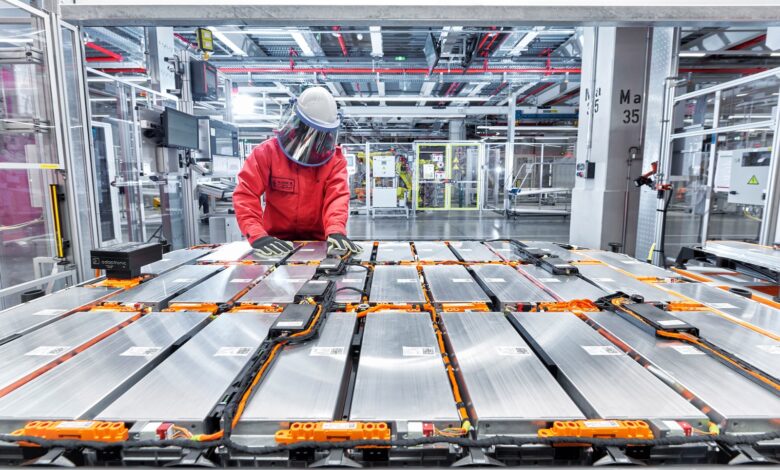
The upcoming industrial unit will carry out several essential steps in the battery manufacturing process. It will produce materials for the cathodes before ensuring the assembly of cells and battery packs primarily intended for electric vehicles.
In addition, the AfDB plans to mobilize up to €141 million more from other financial partners as part of its role as the mandated lead arranger within the New African Financial Architecture for Development.
Capacity Expected to Reach 100 GWh
The project is being driven by the Chinese group Gotion High-Tech, one of the world’s leading manufacturers of electric batteries.
The first phase of the gigafactory anticipates an annual capacity of 10 gigawatt-hours (GWh), dedicated to producing cells and battery packs for electric vehicles. Eventually, the facilities are expected to achieve a capacity of 100 GWh per year, making this factory one of the largest in the Africa and Middle East region.
A Lever for Electric Mobility and Industrialization
According to the African Development Bank, this investment will strengthen Morocco’s position in global value chains related to batteries, energy storage, and electric vehicles.
The project is also expected to foster the emergence of an integrated regional industry around clean technologies while supporting the development of renewable energies through efficient storage solutions.
Kevin Kariuki, the AfDB’s Vice President responsible for Electricity, Energy, Climate, and Green Growth, emphasized that energy storage represents a crucial pillar of the energy transition on the African continent. He believes that this factory, primarily powered by renewable energies, will enhance energy security and support low-carbon industrialization.
Over 600 Direct Jobs Expected
Beyond its industrial impact, the project is expected to generate over 600 direct jobs in its first phase.
The local integration rate is expected to reach 70%, promoting the development of a network of national suppliers, enhancing technical skills, and maximizing the value of locally processed critical minerals.
For Achraf Tarsim, the AfDB’s country manager in Morocco, this gigafactory will solidify the Kingdom’s position as a key industrial platform in Africa for sustainable mobility and energy storage technologies.
Through this financing, the African Development Bank reaffirms its commitment to supporting structural projects that promote industrialization, sustainable infrastructure, the creation of skilled jobs, and the integration of the African continent into global clean energy value chains.