Akhannouch: Moroccan-Senegalese Relations Deeply Rooted in History
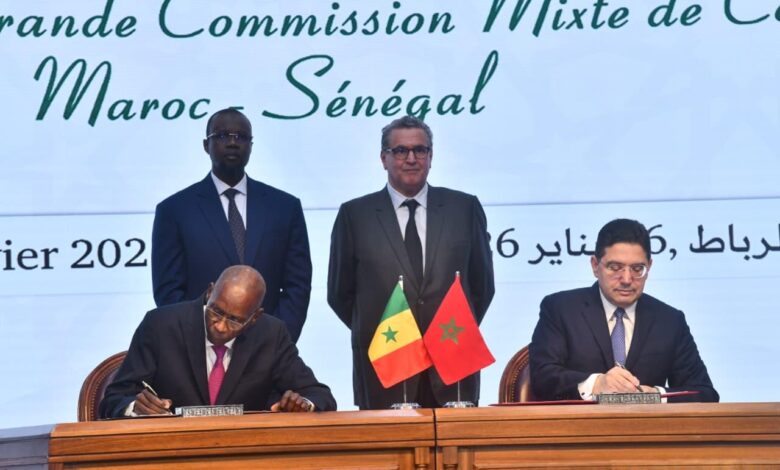
The Head of Government, Aziz Akhannouch, stated that the relations between Morocco and Senegal are built on solid and lasting foundations, encompassing human, religious, and economic dimensions. He emphasized that these are natural and enduring relationships, not mere circumstantial alliances, during his speech at the opening of the 15th session of the Morocco-Senegal Joint Partnership Commission.
Deep Historical and Commercial Links
Akhannouch recalled the central role of historical trade routes connecting Morocco to its African hinterland, particularly through Senegal. These exchanges have contributed to strengthening economic and human interaction between the two peoples over several centuries, fostering a rich cultural and social fabric.
A Strong Religious and Spiritual Dimension
The Head of Government also highlighted the key role of the religious and spiritual pillar in this privileged relationship, emphasizing the influence of the Emir of the Believers and Sufi connections, particularly the Tijaniyya Akhannouch discussed the current dynamism in bilateral relations, recalling the eight official visits by King Mohammed VI to Senegal and the legal framework governing cooperation, which includes over 140 agreements covering various sectors. He specified that today’s meeting is part of this ongoing dynamic, offering the opportunity to take stock of the partnership’s achievements since the last session and to continue joint development while addressing current challenges. The Head of Government emphasized that the period between the two sessions was marked by the implementation of diverse cooperation programs, enhancing the multidimensionality of the partnership and positioning it as a model of African cooperation based on solidarity and mutual respect. He also noted that relationships have experienced a qualitative leap since the election of Senegalese President Macky Sall, marked by a strengthening of ministerial exchanges, legal frameworks, and economic cooperation, as well as an increase in bilateral investments. In conclusion, Akhannouch stressed the necessity to adapt and invigorate existing agreements in response to regional and international developments, while also opening up new opportunities for the private sector in both countries. He recalled the organization of an economic forum alongside the Commission’s proceedings, aimed at supporting these strategic orientations.Dynamic Bilateral Relations and a Solid Legal Framework
Enhanced Multi-Sector Cooperation
Future Perspectives and the Role of the Private Sector